
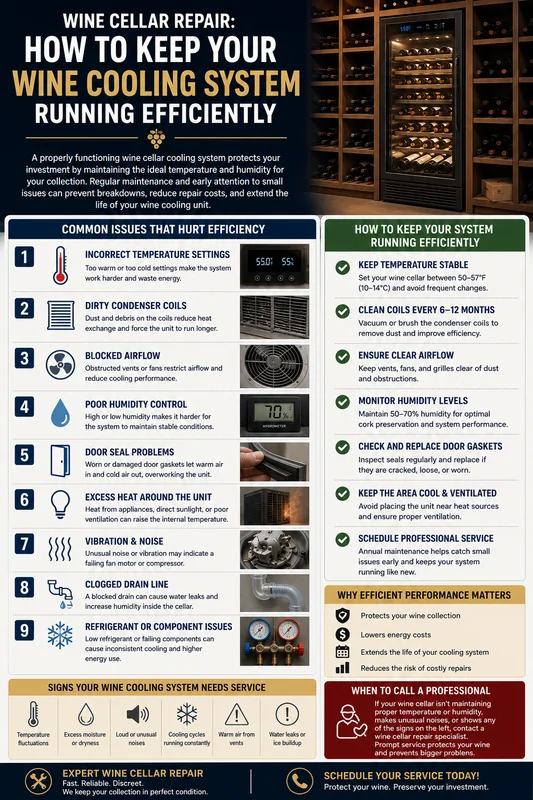
Wine Cellar Repair: How to Keep Your Wine Cooling System Running Efficiently
For wine enthusiasts and collectors, a wine cellar is much more than another household appliance. It’s a carefully controlled environment designed to protect bottles that may have taken years to collect and, in some cases, thousands of dollars to acquire. Whether you own a custom wine cellar, a built-in wine refrigerator, or a premium wine storage cabinet, maintaining consistent cooling conditions is essential.
Unlike a standard refrigerator, a wine cooling system isn’t designed to cool food quickly. Instead, its job is to maintain a stable environment where wine can age properly for years. Even small changes in temperature or humidity can affect the flavor, aroma, and long-term value of your collection.
Routine maintenance and timely wine cellar repair can help prevent unexpected breakdowns while protecting both your investment and your enjoyment of every bottle.
Why Wine Cooling Systems Require Special Care
Many homeowners assume a wine refrigerator works exactly like a kitchen refrigerator.
While both use refrigeration technology, wine cooling systems are engineered differently.
A quality wine cellar is designed to:
- Maintain stable temperatures
- Control humidity levels
- Minimize vibration
- Reduce temperature fluctuations
- Protect cork integrity
- Preserve wine for long-term aging
Because these systems operate continuously and within a narrow temperature range, even minor problems can quickly affect storage conditions.
Stable Temperature Is the Key to Proper Wine Storage
One of the most important jobs of a wine cooling system is maintaining a consistent temperature.
Most collectors store wine between 55°F and 58°F, depending on the type of collection and long-term aging goals.
Frequent temperature swings are often more harmful than slightly warmer or cooler conditions.
When temperatures fluctuate repeatedly, wine expands and contracts inside the bottle, placing stress on the cork and allowing unwanted oxygen to enter.
Over time, this can lead to premature aging and reduced wine quality.
Humidity Matters More Than Many People Realize
Temperature isn’t the only factor that affects wine storage.
Humidity also plays a critical role.
Most wine cellars perform best with humidity levels between 50% and 70%.
If humidity drops too low:
- Corks can dry out.
- Air may enter the bottle.
- Oxidation becomes more likely.
- Wine quality may decline.
Excessive humidity creates different problems, including:
- Mold growth
- Damaged labels
- Musty odors
- Moisture damage inside the cellar
A properly functioning wine cooling system helps maintain the right balance year-round.
Clean Condenser Coils Improve Efficiency
Just like a household refrigerator, a wine cooling system uses condenser coils to release heat.
Over time, dust, lint, and pet hair collect on the coils, forcing the compressor to work harder.
Dirty condenser coils can cause:
- Longer run times
- Higher energy bills
- Reduced cooling performance
- Premature compressor wear
Cleaning the condenser periodically is one of the simplest ways to improve efficiency and extend the life of the cooling system.
Keep Airflow Unrestricted
Good airflow is essential inside every wine cellar.
Blocking air vents with boxes, cases of wine, or oversized bottles can create uneven temperatures throughout the storage area.
To improve airflow:
- Leave space around interior vents.
- Avoid overpacking wine racks.
- Keep the evaporator area unobstructed.
- Allow proper ventilation around built-in cooling units.
Even airflow helps maintain consistent temperatures throughout the entire collection.
Replace Door Seals When They Wear Out
Door gaskets play an important role in maintaining stable storage conditions.
If the seal becomes worn or damaged, warm air continuously enters the wine cellar.
Common warning signs include:
- Condensation around the door
- Longer cooling cycles
- Temperature fluctuations
- Higher energy consumption
- Excess humidity changes
Replacing a worn gasket often restores efficiency while reducing unnecessary strain on the compressor.
Pay Attention to New Noises
Wine cooling systems are designed to operate quietly.
If you suddenly hear:
- Buzzing
- Grinding
- Clicking
- Rattling
- Loud humming
it’s often an early indication that a component is beginning to wear.
Ignoring these sounds may allow a minor repair to develop into a much larger mechanical failure.
Monitor Temperatures Regularly
One of the easiest ways to protect your wine collection is by monitoring temperatures consistently.
Many collectors install independent digital thermometers or wireless monitoring systems.
Watching for gradual temperature changes allows problems to be identified before valuable wine is exposed to unsafe conditions.
If temperatures begin rising unexpectedly, don’t assume the system will correct itself.
Schedule Preventive Maintenance
Like any refrigeration equipment, wine cooling systems benefit from regular professional maintenance.
Routine service typically includes:
- Cleaning condenser coils
- Inspecting fans
- Checking refrigerant performance
- Testing temperature sensors
- Verifying humidity control
- Inspecting electrical components
- Confirming proper airflow
Preventive maintenance often identifies small issues before they become emergency repairs.
Signs Your Wine Cooling System Needs Repair
Your wine cellar will usually provide several warning signs before it stops cooling completely.
Schedule wine cellar repair if you notice:
- Rising temperatures
- Temperature fluctuations
- Excess humidity
- Water leaks
- Frost buildup
- Continuous compressor operation
- Unusual noises
- Error codes on the display
Prompt repairs help protect both your cooling system and your wine collection.
Why Waiting Can Be Expensive
Many wine cooling systems continue operating even while temperatures slowly drift outside the ideal storage range.
Unfortunately, wine doesn’t always show immediate signs of damage.
By the time problems become obvious, valuable bottles may already have been affected.
Delaying repairs can result in:
- Premature wine aging
- Loss of flavor and aroma
- Reduced collection value
- Compressor damage
- More expensive repairs
Protecting the cooling system is often far less expensive than replacing a valuable wine collection.
We Repair Many Premium Wine Cooling Brands
At ACE Appliance Repair, our technicians service many of today’s leading wine refrigeration systems and premium wine storage appliances, including built-in and freestanding models from manufacturers such as:
- Sub-Zero
- Perlick
- U-Line
- Viking
- Marvel
- Liebherr
- Miele
- Thermador
- KitchenAid
- Zephyr
- Vinotemp
- Wine Guardian cooling systems
Whether your wine cellar uses a self-contained cooling unit or a split refrigeration system, we have the experience to diagnose and repair it properly.
Trust ACE Appliance Repair for Professional Wine Cellar Repair
A properly maintained wine cooling system protects more than bottles—it protects years of collecting, aging, and investment. At ACE Appliance Repair, we understand the specialized requirements of premium wine refrigeration systems and provide accurate diagnostics, honest recommendations, and dependable repairs for homeowners throughout the area.
Whether you’re experiencing temperature fluctuations, humidity issues, unusual noises, or a complete cooling failure, our experienced technicians are ready to help.
If your wine cellar isn’t maintaining the ideal environment for your collection, don’t wait until valuable bottles are affected. Call ACE Appliance Repair today at (858) 412-3000 to schedule professional wine cellar repair and keep your collection aging exactly as intended.