
Washer Repair: Why Your Washing Machine Won’t Drain
You open your washing machine after the cycle ends, expecting fresh, clean laundry. Instead, your clothes are sitting in several inches of dirty water. The spin cycle may never start, your laundry is soaking wet, and the washer refuses to complete the program.
A washing machine that won’t drain is one of the most common reasons homeowners call for washer repair. While it may seem like a major appliance failure, the problem is often caused by a clogged drain system, a worn pump, or another component that can be repaired.
The key is identifying the cause before standing water leads to unpleasant odors, mold growth, or damage to the washer itself.
How Does a Washing Machine Drain?
At the end of the wash cycle, the washer activates a drain pump that pushes dirty water through the drain hose and into your home’s plumbing.
Once the water has been removed, the washer begins the high-speed spin cycle to extract moisture from the clothes.
If the washer can’t drain properly, many models will automatically cancel the spin cycle to protect the appliance.
That’s why homeowners often notice two problems at the same time—water left inside the drum and clothes that are still soaking wet.
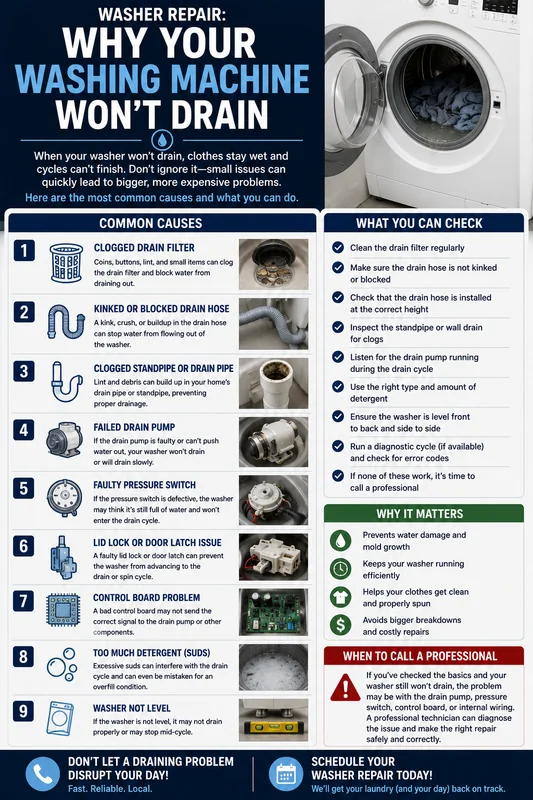
A Clogged Drain Pump Filter Is a Common Cause
Many front-load washing machines include a drain pump filter that catches small objects before they reach the pump.
Over time, the filter can become clogged with:
- Coins
- Buttons
- Hairpins
- Pet hair
- Lint
- Small socks
- Fabric fibers
When the filter becomes restricted, water drains much more slowly or not at all.
Cleaning the filter regularly can help prevent many drainage problems.
The Drain Pump May Have Failed
The drain pump is responsible for removing water from the washer.
Like any motor, it eventually wears out after years of use.
Common signs of a failing drain pump include:
- Standing water inside the drum
- Humming without draining
- Grinding noises
- Slow draining
- Error codes related to drainage
Sometimes the pump motor fails completely. In other cases, debris jams the impeller and prevents it from turning.
The Drain Hose May Be Blocked or Kinked
The drain hose carries wastewater from the washer to your home’s drain.
If the hose becomes clogged, crushed, or kinked behind the appliance, water cannot flow freely.
Possible symptoms include:
- Water remaining after every cycle
- Slow draining
- Gurgling sounds
- Overflow during draining
A technician will typically inspect both the hose and the home’s drain connection to ensure water can flow properly.
Too Much Detergent Can Create Problems
Many homeowners believe that using extra detergent results in cleaner clothes.
In reality, excessive detergent creates too many suds.
Modern washers may struggle to drain excessive foam, causing:
- Long drain cycles
- Drain errors
- Standing water
- Incomplete spin cycles
Using the correct amount of high-efficiency (HE) detergent helps prevent these issues.
The Lid Switch or Door Lock May Prevent Draining
For safety reasons, washing machines won’t enter the spin cycle unless the lid or door is securely locked.
If the lid switch or door lock assembly fails, the washer may stop before draining completely.
Common symptoms include:
- Washer stops before spinning
- Water remains inside
- Door lock errors
- Clicking without starting the spin cycle
This is especially common on both top-load and front-load washers as they age.
Foreign Objects Can Block the Drain Pump
Small items left in clothing pockets often find their way into the drain system.
Technicians frequently remove:
- Coins
- Keys
- Bobby pins
- Small nails
- Children’s toys
- Bra underwires
These objects can block or damage the pump impeller, preventing the washer from draining normally.
Checking pockets before every load helps avoid unnecessary repairs.
Electronic Control Problems Can Interrupt the Drain Cycle
Modern washing machines rely on electronic control boards to coordinate every stage of the wash cycle.
If the control board fails to activate the drain pump at the correct time, the washer may stop with water still inside.
Possible symptoms include:
- Random error codes
- Incomplete wash cycles
- Intermittent draining
- The washer freezing during the cycle
Professional diagnostics help determine whether the problem is electrical or mechanical.
A Blocked Household Drain Can Be the Real Problem
Sometimes the washer is working perfectly.
If your home’s laundry drain is partially blocked, the washing machine has nowhere to discharge the water.
Signs include:
- Water backing up into the laundry sink
- Overflow around the standpipe
- Slow household drains nearby
- Gurgling plumbing sounds
In these situations, the plumbing system—not the washer—may require attention.
Why You Shouldn’t Keep Running a Washer That Won’t Drain
Many homeowners try running another cycle, hoping the problem will resolve itself.
Unfortunately, repeated operation can place additional strain on the drain pump and motor.
Ignoring the issue may result in:
- Pump failure
- Water leaks
- Mold and mildew
- Unpleasant odors
- Damaged clothing
- More expensive repairs
Addressing drainage problems early almost always saves money.
Simple Maintenance Can Prevent Drain Problems
A few simple habits can help keep your washer draining properly.
Here are some recommendations:
- Check clothing pockets before washing.
- Clean the drain pump filter regularly.
- Use the recommended amount of detergent.
- Avoid overloading the washer.
- Inspect the drain hose for kinks.
- Leave the washer door slightly open after use to reduce moisture buildup.
Routine maintenance improves reliability while extending the life of your appliance.
When Should You Call a Professional for Washer Repair?
If your washing machine still won’t drain after checking for obvious blockages, professional service is the best solution.
Schedule washer repair if you notice:
- Water remaining in the drum
- The spin cycle not starting
- Loud grinding or humming noises
- Drain error codes
- Water leaking during draining
- Slow drainage after every cycle
- The washer repeatedly stopping mid-cycle
Early diagnosis often prevents additional damage and helps restore normal operation quickly.
Trust ACE Appliance Repair for Professional Washer Repair
At ACE Appliance Repair, we repair washing machines from all major brands and diagnose drainage problems every day. Our experienced technicians quickly identify whether the issue involves the drain pump, filter, hose, door lock, electronic controls, or another component, ensuring you receive the right repair the first time.
We believe in honest recommendations, quality workmanship, and dependable service that keeps your laundry routine running smoothly.
If your washing machine won’t drain, don’t wait for standing water to become a bigger problem. Call ACE Appliance Repair today at (858) 412-3000 to schedule professional washer repair and get your appliance back to working like it should.