

Samsung Refrigerator Repair: Why the Back Wall Keeps Freezing Over
If you’ve opened your Samsung refrigerator and noticed a layer of frost or solid ice forming on the back wall inside the fresh food compartment, you’re not alone. This is one of the most common refrigerator problems homeowners report, especially with certain Samsung models.
At first, the refrigerator may continue cooling normally, and it’s easy to assume the frost is harmless. Unfortunately, ice buildup on the rear panel is often an early warning sign of a developing problem inside the cooling system. If ignored, the refrigerator may eventually stop cooling properly, food can spoil, and repair costs may increase.
Understanding why the back wall freezes over can help you recognize the problem early and prevent a complete cooling failure.
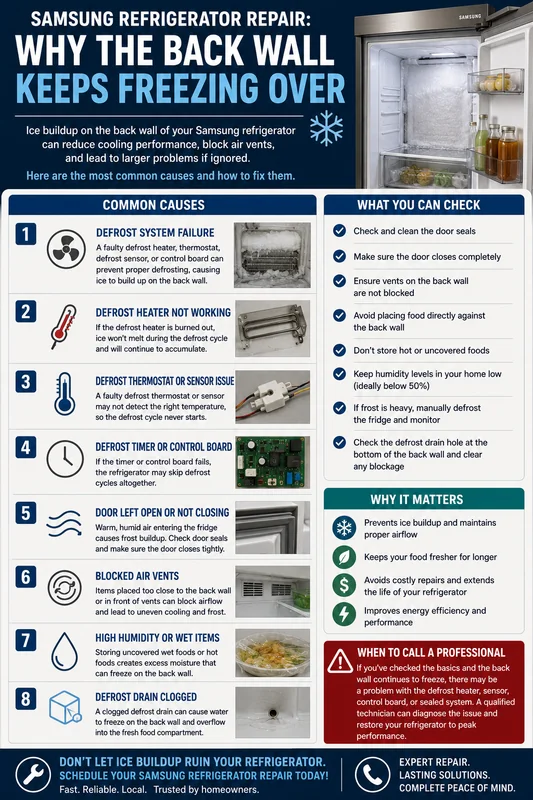
Why Does Ice Form on the Back Wall?
In most Samsung refrigerators, the evaporator coils are located directly behind the rear panel of the fresh food compartment. These coils become extremely cold during normal operation and are responsible for removing heat from inside the refrigerator.
As moisture from the air comes into contact with the cold evaporator, frost naturally forms on the coils. This is completely normal.
To prevent frost from building up, the refrigerator automatically enters a defrost cycle several times each day. During this cycle, the frost melts, drains away, and evaporates underneath the refrigerator.
When part of the defrost system stops working correctly, frost begins accumulating behind the panel until it eventually becomes visible inside the refrigerator.
Frost on the Back Wall Is Not Normal
A thin layer of condensation may occasionally appear under certain conditions, but visible frost or ice on the rear interior wall should never be considered normal.
Many homeowners first notice:
- Frost covering the back panel
- A sheet of ice forming behind the crisper drawers
- Water collecting beneath the drawers after the ice melts
- Food near the back wall beginning to freeze
- The refrigerator compartment becoming warmer over time
These symptoms often appear gradually before cooling performance begins to decline.
A Defrost System Problem Is the Most Common Cause
One of the leading causes of ice buildup is a failure somewhere within the automatic defrost system.
Several components work together during every defrost cycle, including:
- Defrost heater
- Defaporator temperature sensor
- Defrost thermostat (on some models)
- Main electronic control board
If any of these components fail, frost continues accumulating instead of melting away.
As more ice forms, airflow through the evaporator becomes restricted, making it harder for the refrigerator to maintain proper temperatures.
Restricted Airflow Makes the Problem Worse
Samsung refrigerators rely on a steady flow of cold air moving from the evaporator throughout the refrigerator compartment.
As frost grows thicker around the evaporator, airflow becomes increasingly restricted.
Common symptoms include:
- Weak airflow from interior vents
- Uneven temperatures
- Food near the back wall freezing
- Warm temperatures on upper shelves
- Longer compressor run times
Eventually, the refrigerator may appear to stop cooling altogether, even though many of its components are still operating.
A Blocked Defrost Drain Can Lead to Ice Buildup
Another common issue is a clogged or frozen defrost drain.
During the defrost cycle, melted frost must drain through a small tube beneath the evaporator.
If this drain becomes blocked by ice or debris:
- Water cannot leave the evaporator area.
- The water refreezes.
- Ice gradually spreads behind the rear panel.
- Larger sheets of ice begin forming inside the refrigerator.
Cleaning the drain often solves part of the problem, but it’s important to determine why the blockage occurred in the first place.
Door Gaskets Can Allow Excess Moisture Inside
Warm, humid air entering through a worn door gasket creates additional frost inside the refrigerator.
Signs of a damaged door seal include:
- Condensation around the door
- Moisture on shelves
- Frost near the door opening
- The refrigerator running almost constantly
Even a small air leak introduces enough humidity to accelerate ice buildup over time.
Temperature Sensors Can Send Incorrect Information
Samsung refrigerators depend on electronic sensors to monitor internal temperatures.
If a sensor begins sending inaccurate readings, the control board may not initiate the defrost cycle correctly.
Possible symptoms include:
- Frost buildup returning shortly after defrosting
- Inconsistent cooling
- Random temperature changes
- Error codes on the display
- Food freezing unexpectedly
Because sensors and control boards work together, proper diagnosis is essential before replacing either component.
Why Simply Defrosting the Refrigerator Isn’t a Permanent Fix
Many homeowners unplug the refrigerator overnight to melt the ice.
While this temporarily restores airflow, it rarely solves the underlying problem.
If the failed component isn’t repaired, frost usually returns within days or weeks.
Repeated manual defrosting becomes increasingly inconvenient while the actual problem continues to worsen.
Is This a Common Samsung Refrigerator Problem?
Yes.
Our technicians regularly service Samsung refrigerators with frost and ice buildup behind the rear panel.
Although several different components may be responsible, this symptom is common enough that experienced technicians can often narrow down the likely causes during the initial diagnosis.
The exact repair depends on the refrigerator model and the results of electrical testing.
How to Help Prevent Frost Buildup
While not every failure can be prevented, good maintenance helps reduce unnecessary moisture and stress on the cooling system.
Helpful tips include:
- Make sure the doors close completely.
- Keep food from blocking interior air vents.
- Avoid leaving the doors open longer than necessary.
- Clean the door gaskets regularly.
- Replace damaged door seals promptly.
- Schedule service when cooling performance begins to change.
These simple habits help your refrigerator operate more efficiently and reduce the risk of recurring frost problems.
When Should You Call a Professional for Samsung Refrigerator Repair?
If frost continues returning after you’ve removed it, professional service is the best solution.
Schedule Samsung refrigerator repair if you notice:
- Ice forming on the back wall
- Water collecting beneath the crisper drawers
- Weak airflow from the vents
- Food freezing inside the refrigerator compartment
- The refrigerator running continuously
- Cooling performance getting worse
- Error codes appearing on the display
Early diagnosis often prevents food spoilage and helps avoid more extensive repairs.
Trust ACE Appliance Repair for Samsung Refrigerator Repair
At ACE Appliance Repair, we’ve diagnosed and repaired countless Samsung refrigerator cooling problems, including the common issue of frost and ice forming on the back wall. Our experienced technicians understand Samsung’s cooling systems and use professional diagnostic equipment to identify the exact cause—whether it’s a defrost system failure, airflow restriction, faulty sensor, or electronic control issue.
We repair the source of the problem, not just the symptoms, so you can count on reliable performance long after the service call.
If your Samsung refrigerator has ice building up on the back wall or isn’t cooling the way it should, don’t wait until it stops working completely. Call ACE Appliance Repair today at (858) 412-3000 to schedule professional Samsung refrigerator repair and protect your food, your appliance, and your peace of mind.