
Refrigerator Repair: Why Water Is Leaking Inside Your Refrigerator
Opening your refrigerator and finding water pooling beneath the crisper drawers or collecting on the shelves is never a good sign. While a small amount of condensation can be normal, standing water inside the refrigerator almost always indicates that something isn’t working as it should.
Many homeowners simply wipe up the water and move on, hoping the problem will disappear. Unfortunately, refrigerator leaks rarely fix themselves. Over time, excess moisture can damage shelves, food packaging, door seals, and even the flooring beneath the appliance if the leak becomes more severe.
The good news is that most refrigerator water leaks are caused by a handful of common issues that can often be diagnosed and repaired before they lead to larger problems.
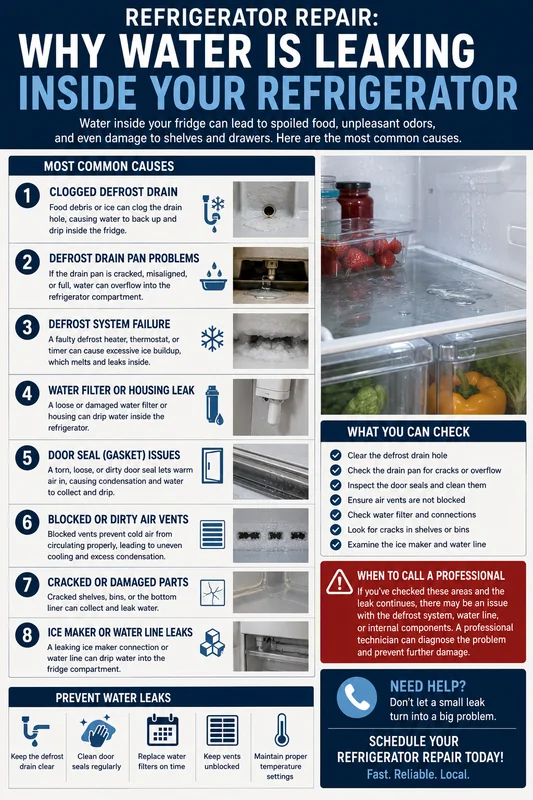
Why Is There Water Inside My Refrigerator?
Your refrigerator constantly removes moisture from the air as part of the cooling process.
During normal operation, this moisture turns into condensation on the evaporator coils. The automatic defrost system melts the frost at scheduled intervals, and the resulting water flows through a small drain hole into a drain pan beneath the refrigerator, where it safely evaporates.
If any part of this drainage system becomes blocked or damaged, water can begin collecting inside the refrigerator instead of draining away.
A Clogged Defrost Drain Is the Most Common Cause
The number one reason homeowners find water inside their refrigerator is a clogged defrost drain.
Food particles, dust, grease, or ice can block the small drain opening located behind the rear interior panel.
When the defrost cycle begins, the melted water has nowhere to go.
Instead, it may:
- Collect beneath the crisper drawers
- Run onto lower shelves
- Freeze into sheets of ice
- Overflow into the fresh food compartment
This is one of the most common refrigerator repairs and is often resolved by clearing the blockage and restoring proper drainage.
Ice Is Blocking the Drain Tube
Sometimes the drain isn’t clogged with debris—it has simply frozen shut.
This often happens when:
- The defrost system isn’t operating properly
- Cold air reaches the drain opening
- Small amounts of water repeatedly freeze inside the tube
As ice builds up, each defrost cycle adds more water until it eventually overflows into the refrigerator compartment.
A technician can determine whether the issue is simply frozen water or an underlying defrost system problem.
The Refrigerator Door May Not Be Sealing Properly
A worn or damaged door gasket allows warm, humid air to enter the refrigerator.
That extra moisture eventually condenses inside the appliance, creating more water than the drainage system was designed to handle.
Signs of a leaking door seal include:
- Moisture around the door
- Condensation on shelves
- Frost near the door opening
- The door not closing tightly
- Higher energy bills
Replacing a worn gasket not only helps eliminate excess moisture but also improves cooling efficiency.
Food May Be Blocking Internal Air Vents
Air circulation is critical inside a refrigerator.
When containers, grocery bags, or large food items block the vents, cold air cannot move evenly throughout the appliance.
This can create areas where warm air condenses into water droplets.
To improve airflow:
- Leave space around interior vents.
- Avoid pushing food against the back wall.
- Don’t overfill the shelves.
- Keep air channels clear between stored items.
Proper airflow helps reduce condensation and maintain consistent temperatures.
The Drain Pan May Be Damaged
Although less common, the drain pan beneath the refrigerator can occasionally crack or become damaged.
If this happens, water may leak before it has a chance to evaporate.
Possible symptoms include:
- Water beneath the refrigerator
- Damp flooring
- Moisture around the rear of the appliance
A damaged drain pan should be replaced to prevent further water damage.
Water Supply Problems Can Also Cause Leaks
If your refrigerator has an ice maker or water dispenser, the leak may not be related to condensation at all.
Possible causes include:
- Loose water line connections
- Cracked plastic tubing
- Damaged water inlet valves
- Leaking water filters
- Improperly installed filter cartridges
These leaks often appear near the back of the refrigerator or beneath the appliance but can sometimes travel into the fresh food compartment.
High Humidity Can Increase Condensation
During periods of high humidity, your refrigerator removes more moisture from the air than usual.
Frequently opening the doors can also allow humid air inside.
Although some condensation is normal, excessive moisture may indicate:
- A worn door gasket
- Doors left open too long
- Poor airflow
- Cooling system issues
Managing indoor humidity and minimizing unnecessary door openings can help reduce condensation.
Why You Shouldn’t Ignore Water Inside the Refrigerator
Even a small leak can become a much larger problem over time.
Ignoring standing water may result in:
- Mold growth
- Food contamination
- Damaged shelves and drawers
- Frozen drain passages
- Water leaking onto the floor
- Higher energy consumption
- Additional cooling problems
The earlier the source of the leak is identified, the easier and less expensive the repair usually is.
Simple Maintenance Can Help Prevent Water Leaks
A few routine maintenance habits can help keep your refrigerator operating properly.
Consider these simple tips:
- Clean the door gaskets regularly.
- Keep air vents inside the refrigerator unobstructed.
- Avoid overpacking the shelves.
- Replace the water filter as recommended.
- Clean the condenser coils every six to twelve months.
- Watch for small puddles before they become larger leaks.
Regular maintenance improves both cooling performance and overall reliability.
When Should You Call a Professional for Refrigerator Repair?
If water continues appearing inside the refrigerator after basic cleaning, it’s time for a professional inspection.
Schedule refrigerator repair if you notice:
- Water collecting beneath the crisper drawers
- Ice forming on the bottom of the freezer
- Water leaking from the rear of the appliance
- Condensation that continues to worsen
- A damaged door gasket
- Water dispenser or ice maker leaks
- Cooling problems occurring along with the leak
Professional diagnosis ensures the actual cause is repaired rather than simply cleaning up the symptoms.
Trust ACE Appliance Repair for Professional Refrigerator Repair
At ACE Appliance Repair, we repair refrigerator water leaks every day. Our experienced technicians quickly identify whether the problem involves the defrost drain, water supply system, door seals, cooling components, or another part of the refrigerator. We service all major appliance brands and provide honest recommendations based on accurate diagnostics—not guesswork.
If you’ve discovered water inside your refrigerator, don’t wait for the leak to damage your appliance or your kitchen floor. Call ACE Appliance Repair today at (858) 412-3000 to schedule professional refrigerator repair and restore your refrigerator to reliable, leak-free operation.