
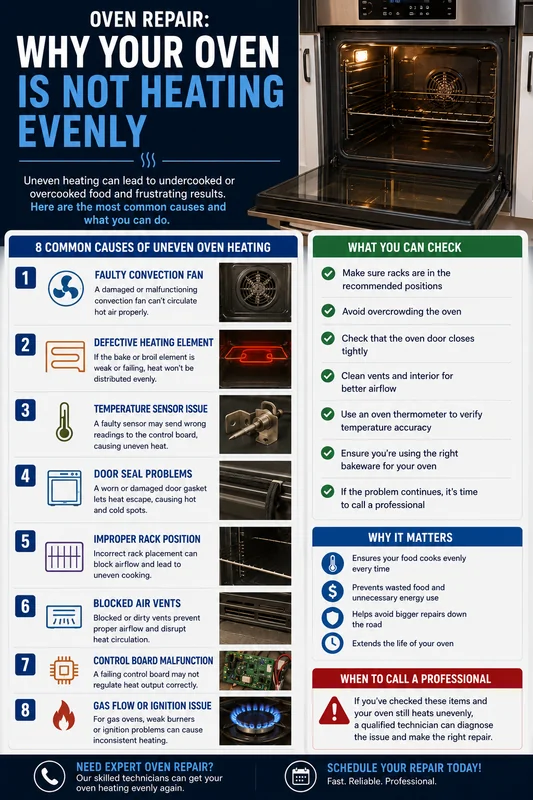
Oven Repair: Why Your Oven Is Not Heating Evenly
Have you ever baked a batch of cookies only to find one side perfectly golden while the other is still pale? Or maybe your casserole is overcooked around the edges but cold in the center. Uneven cooking is one of the most common oven complaints homeowners experience, and it’s often a sign that something inside the appliance isn’t working correctly.
Many people assume their oven simply needs more time or that the recipe is to blame. In reality, an oven that doesn’t heat evenly usually has a mechanical or electrical issue affecting temperature distribution.
The good news is that most uneven heating problems can be diagnosed and repaired before they lead to a complete oven failure.
How Does an Oven Heat Food Evenly?
Whether you own a gas or electric oven, the goal is the same: maintain a consistent temperature throughout the cooking cavity.
Your oven accomplishes this using several components working together, including:
- Bake element or gas burner
- Broil element
- Temperature sensor
- Electronic control board
- Convection fan (on convection models)
- Door gasket
If any one of these components isn’t functioning properly, hot and cool spots can develop inside the oven, causing uneven cooking results.
A Weak Bake Element Is One of the Most Common Causes
In electric ovens, the bake element provides most of the heat during normal baking. As the element ages, it may continue heating but no longer produce enough heat to maintain the selected temperature.
Signs of a failing bake element include:
- Longer cooking times
- Uneven browning
- Food undercooked on the bottom
- Visible blistering or cracks in the element
- Parts of the element not glowing red
A weakened heating element is one of the most common reasons homeowners schedule oven repair.
The Temperature Sensor May Be Sending Incorrect Readings
Modern ovens rely on a temperature sensor to monitor the cooking cavity.
If the sensor becomes inaccurate, the control board may believe the oven has reached the desired temperature when it hasn’t.
Possible symptoms include:
- Food consistently undercooked
- Food burning unexpectedly
- Wide temperature swings
- Longer preheating times
- Inconsistent baking results
Professional testing can determine whether the sensor is operating within factory specifications.
Convection Fan Problems Affect Heat Distribution
Convection ovens use a fan to circulate hot air evenly throughout the oven.
If the fan stops working correctly, heat no longer moves uniformly around the food.
You may notice:
- One oven rack cooking faster than another
- Uneven browning
- Longer cooking times
- Hot spots inside the oven
- Fan noises or no fan operation
Because convection depends on constant airflow, even a partially failing fan can noticeably affect cooking performance.
The Oven May Not Actually Reach the Set Temperature
Sometimes the display says the oven has preheated, but the actual temperature inside is much lower.
Possible causes include:
- Faulty control board
- Weak heating element
- Temperature sensor problems
- Relay failures
- Calibration issues
Using an independent oven thermometer can help identify temperature differences, but professional diagnostics are still necessary to determine the cause.
A Damaged Door Gasket Allows Heat to Escape
The oven door gasket seals heat inside the cooking cavity.
If the gasket becomes worn, torn, or compressed, heat escapes continuously.
Common symptoms include:
- Longer preheating
- Uneven cooking
- Excessive heat around the oven door
- Higher energy consumption
Replacing a damaged gasket often improves both efficiency and cooking performance.
Rack Placement Matters More Than You Think
Not every uneven baking problem is caused by a broken component.
Improper rack placement can affect airflow and heat circulation.
For best results:
- Bake most foods on the center rack.
- Avoid blocking the convection fan.
- Leave space around cookware.
- Don’t overcrowd the oven.
Good airflow allows heat to circulate evenly around your food.
The Control Board May Be Cycling Heat Incorrectly
Modern ovens use electronic control boards to regulate heating elements and maintain precise temperatures.
If the control board begins malfunctioning, it may:
- Turn heating elements on and off too quickly
- Allow excessive temperature swings
- Misread sensor information
- Display inaccurate temperatures
Electronic problems often require specialized testing before replacing expensive components.
Why You Shouldn’t Ignore Uneven Heating
Many homeowners simply adjust cooking times to compensate for poor oven performance.
Unfortunately, this doesn’t solve the underlying problem.
Over time, uneven heating can lead to:
- Worsening cooking performance
- Additional component failures
- Higher energy bills
- Longer preheating times
- Complete heating failure
Addressing the issue early often prevents larger repairs later.
Simple Maintenance Can Improve Oven Performance
A few routine maintenance habits can help your oven maintain even temperatures.
Consider these tips:
- Keep the oven interior clean.
- Avoid covering oven vents with foil.
- Inspect the door gasket periodically.
- Don’t slam the oven door.
- Allow proper air circulation around cookware.
- Schedule service if temperatures begin changing.
Regular maintenance helps your oven perform more consistently throughout its lifespan.
Gas Ovens Can Develop Similar Problems
Although gas ovens use burners instead of electric heating elements, they can experience many of the same symptoms.
Uneven heating may result from:
- Weak igniters
- Dirty burners
- Faulty temperature sensors
- Control board issues
- Restricted airflow
Professional diagnosis identifies the actual cause regardless of whether your oven is gas or electric.
When Should You Call a Professional for Oven Repair?
If your meals consistently cook unevenly despite following recipes correctly, it’s time for a professional inspection.
Schedule oven repair if you notice:
- Uneven baking
- Long preheating times
- Food burning on one side
- Inaccurate temperatures
- Error codes
- Heating elements not glowing properly
- Convection fan problems
- The oven struggling to maintain temperature
Accurate diagnosis helps restore proper cooking performance while avoiding unnecessary part replacements.
Trust ACE Appliance Repair for Professional Oven Repair
At ACE Appliance Repair, we repair gas and electric ovens from all major appliance brands. Our experienced technicians use professional diagnostic equipment to identify heating problems involving bake elements, temperature sensors, convection fans, control boards, igniters, and other critical components.
We believe in honest recommendations, precise diagnostics, and quality repairs that restore your oven’s performance the right way.
If your oven isn’t heating evenly, don’t let inconsistent cooking ruin another meal. Call ACE Appliance Repair today at (858) 412-3000 to schedule professional oven repair and get your kitchen back to baking with confidence.