
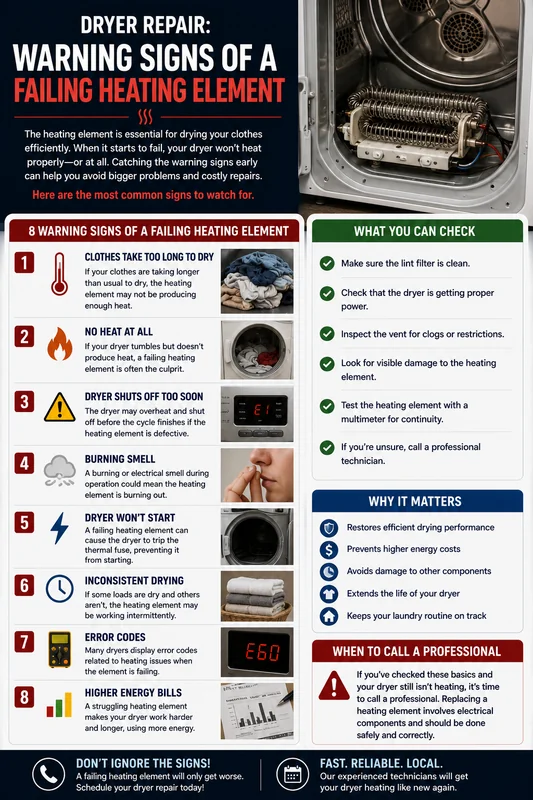
Dryer Repair: Warning Signs of a Failing Heating Element
You start a load of laundry expecting warm, dry clothes in about an hour. Instead, the dryer runs for a full cycle, but your clothes are still damp. Maybe they feel slightly warm, or maybe they’re almost as wet as when you put them in. Many homeowners assume the dryer simply needs more time, but this is often one of the earliest signs of a failing heating element.
For electric dryers, the heating element is responsible for generating the hot air that removes moisture from your clothes. When it begins to wear out, drying performance gradually declines before the element fails completely.
Recognizing the warning signs early can help you schedule dryer repair before additional components are affected.
What Does the Heating Element Do?
Inside an electric dryer is a coiled resistance wire called the heating element.
When electricity passes through the coil, it becomes extremely hot. The blower then moves air across the heating element and circulates that hot air through the drum, allowing moisture to evaporate from your laundry.
Without sufficient heat, the dryer may continue tumbling normally, but clothes will take much longer to dry.
It’s important to note that this article applies primarily to electric dryers. Gas dryers use a different heating system with an igniter, flame sensor, and gas valve assembly.
Clothes Take Much Longer to Dry
The most common symptom of a weakening heating element is increasing drying time.
At first, you may simply notice that towels require an extra twenty or thirty minutes.
As the element continues to deteriorate, you may need two or even three complete drying cycles.
Long drying times not only waste electricity but also place unnecessary wear on the motor, drum rollers, and other moving parts.
The Dryer Runs Normally but Doesn’t Produce Enough Heat
A failing heating element doesn’t always stop working immediately.
Sometimes it still generates heat, just not enough to dry clothes efficiently.
You may notice:
- Clothes feel warm but remain damp.
- Heavy fabrics never dry completely.
- Drying performance changes from load to load.
- The dryer seems to run normally otherwise.
Because the drum still turns, many homeowners mistakenly assume the dryer itself is fine.
The Dryer Produces No Heat at All
Eventually, the heating element may burn out completely.
When this happens, the dryer tumbles exactly as it should, but only room-temperature air circulates through the drum.
Common symptoms include:
- Clothes remaining wet after every cycle
- No noticeable heat inside the drum
- Extremely long drying times
- Normal drum rotation without drying
Complete heating failure usually requires professional diagnosis because other components can produce similar symptoms.
Burning Smells Should Never Be Ignored
A damaged heating element may overheat before it fails completely.
If you notice:
- A burning odor
- Hot electrical smells
- Smoke
- Scorch marks inside the drum
stop using the dryer immediately.
These symptoms may indicate a damaged heating element, electrical wiring problem, or lint accumulation that requires prompt attention.
The Dryer Repeatedly Trips the Circuit Breaker
A failing heating element can sometimes develop an internal short circuit.
This may cause:
- Repeated breaker trips
- The dryer shutting off unexpectedly
- Inconsistent heating
- Electrical burning odors
Electrical problems should always be inspected by a qualified technician before the dryer is used again.
Restricted Airflow Can Damage the Heating Element
A clogged dryer vent doesn’t just slow drying—it can also shorten the life of the heating element.
When hot air cannot leave the dryer efficiently, temperatures inside the appliance rise significantly.
This extra heat places continuous stress on:
- The heating element
- Thermal fuses
- High-limit thermostats
- Blower components
Keeping the dryer vent clean is one of the best ways to protect the heating system.
Other Components Can Mimic a Failed Heating Element
Not every no-heat problem is caused by the heating element itself.
Several other components can produce nearly identical symptoms, including:
- Thermal fuses
- Cycling thermostats
- High-limit thermostats
- Electronic control boards
- Power supply problems
- Wiring issues
Professional testing ensures the actual failed component is identified before replacement.
Why You Shouldn’t Keep Running the Dryer
Many homeowners continue using the dryer for several weeks by simply running multiple cycles.
Unfortunately, this creates additional wear on the appliance.
Long operating times increase stress on:
- Drum rollers
- Drive belt
- Motor
- Idler pulley
- Bearings
- Blower wheel
Addressing the heating problem early often prevents much larger repairs later.
Simple Maintenance Can Extend Heating Element Life
While heating elements eventually wear out, proper maintenance helps maximize their lifespan.
Helpful maintenance includes:
- Clean the lint filter after every load.
- Have the dryer vent cleaned regularly.
- Avoid overloading the dryer.
- Don’t ignore longer drying times.
- Inspect the outside vent for proper airflow.
- Schedule service when performance begins changing.
These simple habits improve efficiency while reducing unnecessary strain on the heating system.
How Is a Heating Element Diagnosed?
Professional technicians don’t simply replace the heating element based on symptoms alone.
A complete diagnosis typically includes checking:
- Heating element continuity
- Incoming voltage
- Thermal fuses
- Cycling thermostats
- High-limit thermostat
- Wiring connections
- Airflow through the dryer
This process ensures the true cause of the problem is corrected.
When Should You Call a Professional for Dryer Repair?
If your electric dryer is taking much longer to dry clothes or producing little to no heat, professional service is recommended.
Schedule dryer repair if you notice:
- Clothes remaining damp after one cycle
- No heat inside the drum
- Burning odors
- Repeated breaker trips
- Long drying times
- Error codes
- Inconsistent heating
- Weak airflow
Early diagnosis can prevent additional damage and restore your dryer’s performance quickly.
Trust ACE Appliance Repair for Professional Dryer Repair
At ACE Appliance Repair, we diagnose and repair electric dryers from all major manufacturers. Our experienced technicians inspect the entire heating system—including the heating element, thermostats, thermal fuses, wiring, and airflow—to determine exactly why your dryer isn’t producing enough heat.
We focus on accurate diagnostics, honest recommendations, and reliable repairs that help extend the life of your appliance.
If your dryer is taking too long to dry clothes or has stopped producing heat altogether, don’t wait for the problem to become more expensive. Call ACE Appliance Repair today at (858) 412-3000 to schedule professional dryer repair and get your laundry routine back to normal.