
Dryer Repair: How to Prevent Dryer Vent Problems
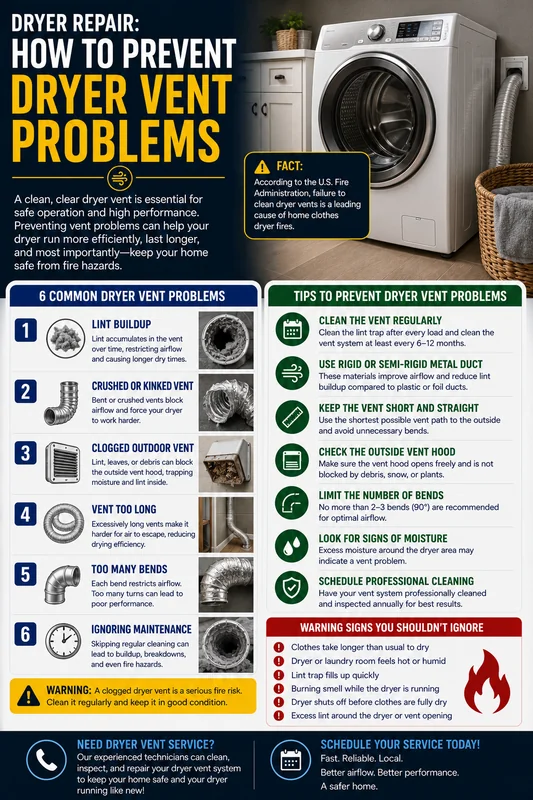
Most homeowners think about cleaning the lint filter after every load, but very few give much attention to the dryer vent. That’s unfortunate because a clogged or restricted dryer vent is one of the most common causes of poor dryer performance, expensive repairs, and even house fires.
If your clothes are taking longer to dry, your laundry room feels unusually warm, or the dryer seems hotter than normal, the vent system may already be partially blocked.
The good news is that most dryer vent problems are preventable. With regular maintenance and a few simple habits, you can improve drying performance, lower your energy bills, and extend the life of your dryer.
Why Is the Dryer Vent So Important?
Your dryer doesn’t just produce heat—it also removes moisture from your clothes.
As the drum turns, warm air absorbs moisture and carries it through the exhaust vent to the outside of your home. If that airflow becomes restricted, the dryer can’t remove moisture efficiently.
Instead of leaving your home, hot, humid air remains trapped inside the dryer, forcing the appliance to work much harder than it should.
Good airflow is essential for:
- Faster drying times
- Lower energy consumption
- Reduced wear on dryer components
- Safe operation
- Longer appliance life
A properly maintained vent system allows your dryer to perform as it was designed.
Lint Builds Up Faster Than Most People Realize
Every load of laundry produces lint.
While the lint filter captures much of it, tiny fibers continue traveling through the exhaust system.
Over months and years, lint gradually collects inside:
- The flexible vent hose
- Elbows in the ductwork
- Long vent runs
- Exterior vent hoods
Eventually, airflow becomes restricted, even if the lint filter is cleaned after every load.
Many homeowners don’t discover the problem until drying times double or the dryer begins overheating.
Longer Drying Times Are an Early Warning Sign
One of the first symptoms of a restricted dryer vent is clothes taking much longer to dry.
Instead of finishing in one cycle, you may need two or even three cycles for towels or heavy clothing.
This happens because moisture remains trapped inside the dryer instead of being exhausted outdoors.
Ignoring longer drying times often leads to unnecessary wear on the heating system and motor.
An Overheated Dryer Is Working Too Hard
Restricted airflow traps heat inside the appliance.
As internal temperatures rise, components experience significantly more stress.
Overheating can contribute to:
- Premature heating element failure
- Thermal fuse problems
- High-limit thermostat failures
- Motor overheating
- Shortened appliance lifespan
What begins as a simple vent restriction can eventually become a much larger dryer repair.
A Clogged Vent Increases Fire Risk
Lint is highly flammable.
According to fire safety experts, blocked dryer vents are one of the leading causes of residential dryer fires.
When lint accumulates inside the vent system, heat cannot escape properly.
Combined with extremely high operating temperatures, this creates conditions where lint can ignite.
Routine vent cleaning is one of the simplest ways to improve both appliance safety and home safety.
Don’t Ignore the Outside Vent Hood
Many homeowners clean the lint filter but never inspect the vent outside the house.
The exterior vent hood should open freely whenever the dryer is running.
If it remains closed or opens only slightly, airflow may already be restricted.
Common causes include:
- Lint buildup
- Bird nests
- Insect nests
- Leaves
- Damaged vent flaps
Checking the exterior vent periodically helps identify problems before they become serious.
Flexible Plastic Vent Hoses Can Cause Problems
Older homes sometimes still have plastic or thin foil vent hoses.
These materials trap lint more easily and are more likely to sag or become crushed behind the dryer.
Rigid or semi-rigid metal vent ducts are generally considered the safest and most efficient option because they:
- Improve airflow
- Reduce lint accumulation
- Resist crushing
- Last longer
- Lower fire risk
Upgrading an outdated vent hose can significantly improve dryer performance.
Avoid Pushing the Dryer Too Close to the Wall
It’s common to accidentally crush the vent hose while pushing the dryer back into place after cleaning.
A flattened vent restricts airflow just as much as lint buildup.
Leave enough space behind the dryer so the vent duct remains fully open without sharp bends or kinks.
Even a small restriction can reduce airflow more than many homeowners realize.
Clean the Lint Filter Every Single Load
This simple habit makes a bigger difference than most people expect.
A clean lint filter:
- Improves airflow
- Reduces drying time
- Helps the dryer run cooler
- Improves energy efficiency
Occasionally wash the lint screen with warm water and a small amount of dish soap as well. Fabric softener residue can build up on the screen and reduce airflow even when it appears clean.
Don’t Overload the Dryer
Large loads produce more lint and require significantly more airflow to dry properly.
Overloading can lead to:
- Longer drying cycles
- Increased lint accumulation
- Higher operating temperatures
- Extra strain on the motor and drum support components
Following the manufacturer’s recommended load size helps both the dryer and vent system perform more efficiently.
How Often Should the Dryer Vent Be Cleaned?
The answer depends on how often the dryer is used.
For most households, a professional dryer vent cleaning every one to two years is recommended.
However, more frequent cleaning may be needed if:
- You have a large family.
- You do laundry almost every day.
- You own pets that shed heavily.
- Clothes suddenly take much longer to dry.
- You notice excessive heat around the dryer.
Regular inspections can help determine the right cleaning schedule for your home.
Signs Your Dryer Vent Needs Immediate Attention
Don’t wait until the dryer stops working completely.
Schedule service if you notice:
- Clothes staying damp after one cycle
- The dryer becoming unusually hot
- Burning odors
- Excess lint around the dryer
- The outside vent flap barely opening
- Higher energy bills
- Moisture or condensation in the laundry room
These warning signs often indicate restricted airflow that should be corrected as soon as possible.
When Should You Call a Professional for Dryer Repair?
A clogged vent isn’t the only reason a dryer performs poorly.
If airflow has been restricted for an extended period, additional components may also require attention.
Professional dryer repair is recommended if you notice:
- Repeated overheating
- The dryer shutting off before the cycle ends
- Loud noises
- Burning smells
- No heat
- Long drying times even after cleaning the vent
- Error codes or warning lights
A complete inspection ensures both the dryer and the vent system are operating safely and efficiently.
Trust ACE Appliance Repair for Professional Dryer Repair
At ACE Appliance Repair, we know that many dryer problems begin with poor airflow. Our experienced technicians inspect both the appliance and the vent system to identify restrictions, overheating issues, worn components, and other problems that can affect drying performance and safety.
Whether your dryer needs vent maintenance, heating system repairs, or a complete diagnostic inspection, we’re committed to providing honest recommendations and reliable service.
If your dryer is taking longer to dry clothes or showing signs of restricted airflow, don’t ignore the warning signs. Call ACE Appliance Repair today at (858) 412-3000 to schedule professional dryer repair and keep your laundry routine running safely and efficiently.