

Dishwasher Repair: Why Your Dishwasher Is Not Cleaning Dishes Properly
Few things are more frustrating than opening the dishwasher after a full cycle only to find food still stuck on plates, cloudy glasses, or greasy cookware that needs to be washed again. A dishwasher is supposed to save time, not create more work. When it stops cleaning properly, many homeowners immediately assume the appliance has reached the end of its life.
Fortunately, that’s rarely the case.
Poor cleaning performance is one of the most common reasons homeowners schedule dishwasher repair, and in many situations, the problem can be traced to a worn component, restricted water flow, or simple maintenance that has been overlooked. Catching the issue early can restore your dishwasher’s performance while preventing more expensive repairs down the road.
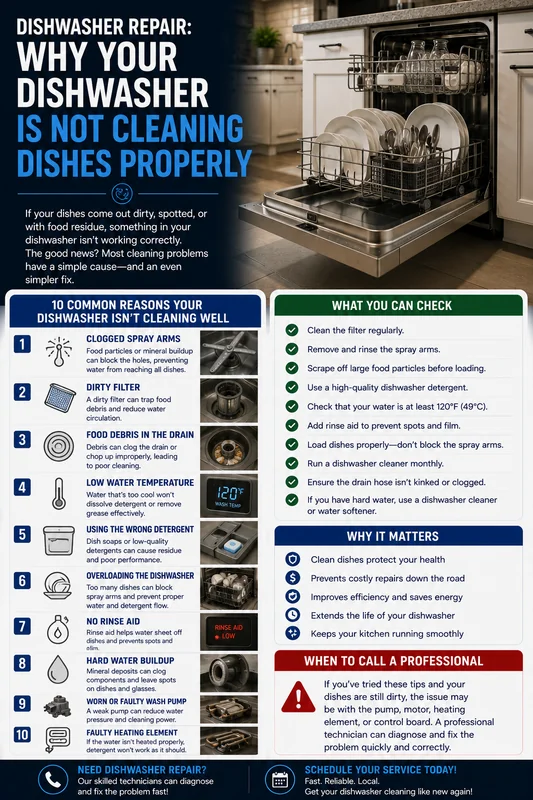
How Does a Dishwasher Actually Clean Dishes?
A dishwasher doesn’t scrub dishes the way your hands do. Instead, it relies on a carefully balanced combination of hot water, water pressure, detergent, and spray arm movement.
During each cycle, the dishwasher:
- Fills with a measured amount of water.
- Heats the water to the proper temperature.
- Pumps water through rotating spray arms.
- Filters food particles from the water.
- Drains dirty water before rinsing.
If any part of this process is interrupted, cleaning performance can suffer.
The Spray Arms May Be Clogged
One of the most common causes of dirty dishes is clogged spray arms.
Over time, tiny food particles, grease, hard water deposits, or even small pieces of broken glass can block the spray arm holes.
When this happens, water pressure decreases and some dishes receive little or no cleaning action.
Signs of clogged spray arms include:
- Food left on dishes in the same areas every cycle
- One rack cleaning better than the other
- Poor cleaning in the corners of the dishwasher
- Visible debris inside the spray arm openings
Cleaning the spray arms regularly helps restore proper water circulation.
A Dirty Filter Can Reduce Cleaning Performance
Modern dishwashers use filters to prevent food particles from circulating back onto clean dishes.
If the filter becomes clogged, water flow is restricted and food debris may remain inside the dishwasher throughout the cycle.
Symptoms include:
- Food particles left on dishes
- Dirty water remaining in the bottom
- Unpleasant odors
- Longer wash cycles
- Reduced cleaning performance
Cleaning the filter every few weeks is one of the simplest ways to keep your dishwasher operating efficiently.
Are You Loading the Dishwasher Correctly?
Even a perfectly functioning dishwasher cannot clean dishes that are improperly loaded.
Common loading mistakes include:
- Large pans blocking the spray arms
- Plates packed too closely together
- Bowls facing the wrong direction
- Utensils nesting together
- Overloading the racks
Water must be able to reach every surface. Leaving enough space between dishes allows the spray arms to do their job effectively.
Low Water Temperature Can Leave Dishes Dirty
Hot water plays a critical role in breaking down grease and activating dishwasher detergent.
Most manufacturers recommend incoming water temperatures of approximately 120°F.
If the water entering the dishwasher is too cool, you may notice:
- Greasy residue
- White film on dishes
- Detergent not fully dissolving
- Food remaining after the cycle
Running the kitchen faucet until the water becomes hot before starting the dishwasher can improve cleaning performance.
Hard Water Can Cause Cloudy Dishes
If you live in an area with hard water, mineral deposits can build up inside the dishwasher and on your dishes.
Common signs include:
- Cloudy glasses
- White residue
- Water spots
- Mineral buildup inside the appliance
Using a rinse aid and periodically cleaning the dishwasher with a dishwasher cleaner can help reduce mineral deposits.
The Wash Pump May Be Losing Pressure
The circulation pump is responsible for forcing water through the spray arms.
As the pump wears over time, it may no longer produce enough water pressure to clean dishes effectively.
Possible symptoms include:
- Dishes remaining dirty on both racks
- Weak spray action
- Quiet or unusual pump noises
- Longer cleaning cycles
A failing circulation pump often requires professional dishwasher repair.
Worn Spray Arm Bearings or Supports
The spray arms must rotate freely to distribute water evenly throughout the dishwasher.
If bearings or support components wear out, the spray arms may stop turning correctly.
This can result in:
- Certain dishes always remaining dirty
- Uneven cleaning
- Reduced water coverage
- Clicking sounds during operation
A technician can quickly determine whether the spray arms are rotating properly.
The Detergent Isn’t Being Released Correctly
Sometimes the dishwasher itself isn’t the problem.
If the detergent dispenser fails to open, or if detergent becomes wet before the cycle begins, cleaning performance drops dramatically.
Possible causes include:
- Faulty dispenser latch
- Obstructed dispenser door
- Moisture causing detergent to clump
- Incorrect detergent type
Always use fresh, high-quality dishwasher detergent and make sure nothing blocks the dispenser door.
The Dishwasher Isn’t Draining Completely
Dirty water should leave the dishwasher before the rinse cycle begins.
If water remains inside the tub, food particles may redeposit onto dishes.
Common causes include:
- Clogged drain filter
- Blocked drain hose
- Worn drain pump
- Garbage disposal connection issues
Standing water at the bottom of the dishwasher should never be ignored.
Electronic Sensors Can Affect Cleaning Cycles
Modern dishwashers use sensors to monitor water temperature, soil levels, and cycle performance.
If one of these sensors begins to fail, the dishwasher may shorten the cycle or use less water than necessary.
Possible symptoms include:
- Inconsistent cleaning
- Shortened cycles
- Random error codes
- Dishes that remain dirty despite normal operation
Professional diagnostics can identify sensor-related issues quickly.
Simple Maintenance Tips for Better Cleaning Results
A little routine maintenance goes a long way toward keeping your dishwasher performing like new.
Here are a few simple habits to follow:
- Clean the filter regularly.
- Rinse heavy food debris before loading.
- Keep the spray arms free of blockages.
- Use the correct amount of detergent.
- Refill rinse aid as needed.
- Run a dishwasher cleaner monthly.
- Avoid overcrowding the racks.
These simple steps improve both cleaning performance and the overall lifespan of the appliance.
When Should You Call a Professional for Dishwasher Repair?
If you’ve cleaned the filter, checked the spray arms, and loaded the dishwasher correctly but your dishes still aren’t coming out clean, it’s time for a professional inspection.
Schedule dishwasher repair if you notice:
- Poor cleaning during every cycle
- Food left on dishes consistently
- Weak spray pressure
- Standing water inside the tub
- Unusual noises
- Water leaks
- Error codes
- The detergent dispenser not opening properly
Early diagnosis often prevents additional wear and helps restore your dishwasher’s performance before larger problems develop.
Trust ACE Appliance Repair for Professional Dishwasher Repair
At ACE Appliance Repair, we know how frustrating it is when your dishwasher finishes a cycle but leaves you with dirty dishes. Our experienced technicians service all major dishwasher brands and use advanced diagnostics to identify the real cause of poor cleaning performance. Whether the issue involves the circulation pump, spray arms, drain system, sensors, or another component, we’ll provide honest recommendations and dependable repairs you can trust.
If your dishwasher isn’t cleaning dishes the way it should, don’t waste time rewashing every load. Call ACE Appliance Repair today at (858) 412-3000 to schedule professional dishwasher repair and get your kitchen back to running efficiently.