
What Causes a Dishwasher to Leak Water
A puddle under the dishwasher ranks among the most stressful appliance problems a homeowner can face. Water on hardwood or tile can warp flooring within hours of sitting there. Rancho Bernardo Appliance Repair has spent over 15 years on this exact problem. Our technicians know why a dishwasher is leaking water in kitchens across San Diego County. Most leaks trace back to a short list of common causes. Knowing them helps you decide whether to try a quick fix or call a technician right away.
A Worn Door Gasket Is the Usual Culprit
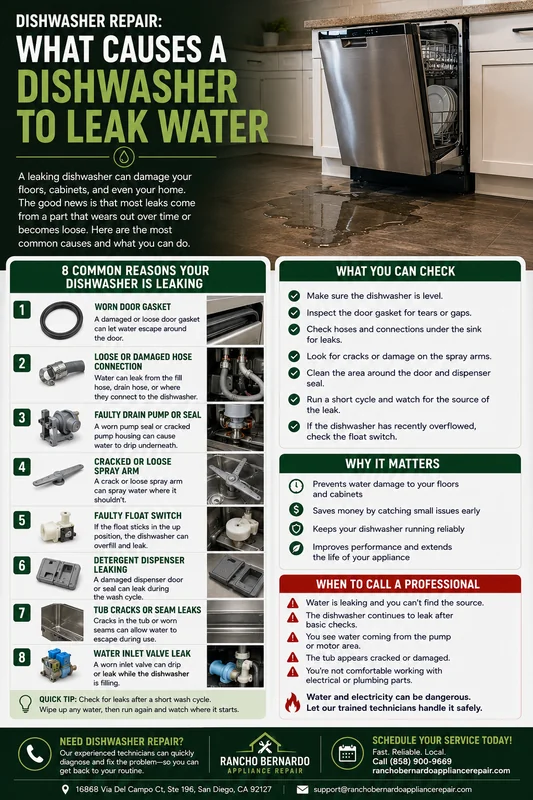
The rubber gasket around the door seals water inside the tub during each cycle. Years of heat and detergent exposure make this seal brittle and cracked. Once it loses flexibility, water creeps out along the bottom edge of the door. Replacing a worn gasket is usually a quick job for a trained technician.
Damaged or Loose Spray Arm Parts
The lower spray arm sits close to the door seal and pushes water throughout the tub. A cracked arm or worn mounting hub sends water sideways instead of upward. That misdirected spray often lands right on the door area. It creates a leak that looks like a failed seal, but is not.
Dishes Loaded Against the Door
Tall pans and cutting boards can lean against the door seal or block the spray arm path. Overloaded racks also cause water to splash beyond the tub walls. Rearranging dishes so nothing touches the door often stops a leak within the very next wash cycle.
The Wrong Detergent or Too Much of It
Regular dish soap creates thick suds that a dishwasher was never built to handle. Those suds climb past the seal and pool on the floor within minutes. Even too much dishwasher detergent, common in the soft water areas around Rancho Bernardo, can trigger the same sudsy overflow.
A Failing Water Inlet Valve
The inlet valve controls how much water fills the tub before each wash. When this valve sticks open, the tub keeps filling well past its normal level. Extra water has nowhere to go but out from under the door, often pooling near the front kick plate.
Cracks in the Tub or Loose Hose Fittings
Hairline cracks in the tub base and loose supply or drain hose fittings are less common but more serious. These leaks tend to start small and grow worse with every cycle. A technician can pressure test the connections and check for stress cracks that are hard to spot.
When a Small Leak Points to a Bigger Problem
Some leaks begin as a few drops and slowly worsen over several weeks. Ignoring one lets moisture soak into subflooring, which invites warping and mold growth. Recurring puddles even after checking the racks and gasket usually mean it is time to call a professional.
Simple Steps Before the Technician Arrives
Shut off the dishwasher and close the water supply valve under the sink if the leak looks severe. Lay towels around the base to protect your flooring while you wait for service. Skip any extra cycles, since each one adds more water to an already compromised seal or valve.
Why DIY Sealant Fixes Often Fall Short
Store bought sealants promise a quick patch but rarely bond well to the flexible rubber used in gaskets. These products can also block drainage paths or interfere with the door latch mechanism. A proper part replacement almost always outlasts any tube of sealant from the hardware store.
How Regular Maintenance Prevents Future Leaks
Wiping down the door gasket monthly removes food residue that speeds up cracking and hardening. Running an empty cleaning cycle every few months also keeps the tub and spray arm free of buildup. These small habits go a long way toward stopping a dishwasher leaking water before it ever starts.
What a Professional Diagnostic Visit Involves
A technician typically checks the gasket, spray arm, and inlet valve first. Then a test cycle runs so leaks can be watched for directly. This hands on approach catches issues that are not obvious just from looking at the unit. Most diagnostic visits are completed within an hour for a standard kitchen dishwasher.
Protecting Your Kitchen While You Wait for Service
Place a shallow tray or towels under the front of the dishwasher to catch any ongoing drips. Avoid running the unit again until a technician confirms what is safe to use in the meantime. This simple precaution limits damage to flooring and cabinets during the waiting period.
Choosing a Reliable Repair Service
Ask any technician how they diagnose leaks before agreeing to a repair. A clear answer signals real experience with your specific dishwasher brand and model. Rancho Bernardo Appliance Repair welcomes these questions from every customer we serve.
A dishwasher leaking water rarely fixes itself, and letting it continue risks real damage to flooring and cabinets. Rancho Bernardo Appliance Repair technicians pinpoint the exact source before recommending any repair. You are never left guessing or paying for the wrong part. Since 2001, our team has handled leak calls on every major dishwasher brand throughout San Diego County. Reach out before the next wash cycle turns a small drip into a bigger repair bill.
FAQ: Dishwasher Leaking Water
Why does my dishwasher leak only during the wash cycle?
A leak appearing only during the wash cycle usually points to a worn door gasket. It can also mean an overfilled tub from a stuck water inlet valve. Both issues let water escape past the door seal while the pump runs. A technician can pressure test the valve and inspect the gasket in one visit. This confirms which part is causing the dishwasher leaking water before ordering anything.
Is it safe to keep using a dishwasher that leaks a little?
Running a leaking dishwasher risks warped flooring, damaged cabinets, and mold growth in the subfloor over time. Even a small leak tends to worsen with each cycle rather than staying the same. It is safer to pause the unit and call a technician than to keep washing dishes while water pools underneath.
Can too much detergent really cause a dishwasher to leak?
Yes, regular dish soap or excess dishwasher detergent creates thick suds that overflow past the door seal quickly. This is especially common in the softer water found around parts of San Diego County. Switching to the correct amount of proper detergent often stops the sudsy overflow within the very next cycle.
How much does it cost to fix a leaking dishwasher?
Cost depends entirely on the cause. A gasket replacement is far cheaper than a cracked tub or failed inlet valve. Simple seal repairs are usually the most affordable option a technician can offer. Getting an accurate diagnosis first prevents paying for parts that were never the actual problem.
Should I call a professional or try fixing the leak myself?
Simple causes like an overloaded rack or wrong detergent are worth checking yourself before calling anyone. Anything involving the gasket, valve, or internal hoses is safer left to a trained technician. Rancho Bernardo Appliance Repair can diagnose the exact cause quickly and avoid unnecessary trial and error repairs.