Heating Repair: Why Your Furnace Turns On and Off Repeatedly
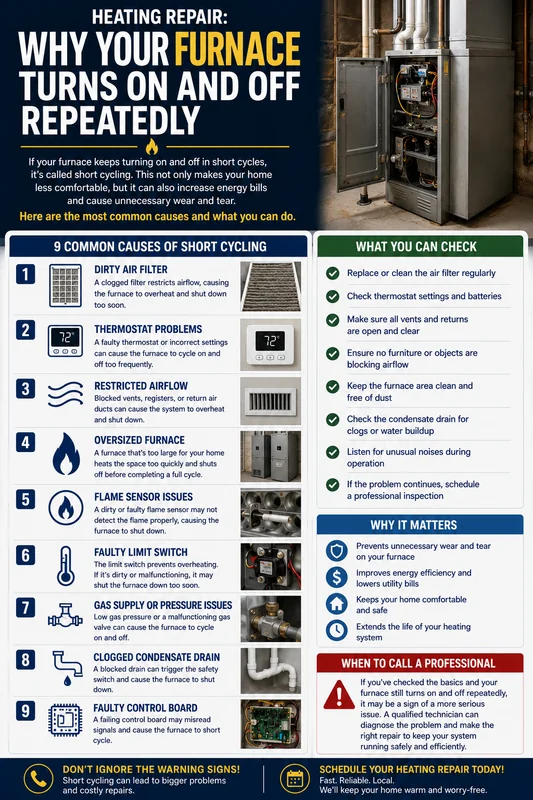
Does your furnace start normally, run for a few minutes, shut off, and then start again shortly afterward? This pattern, known as short cycling, is one of the most common heating problems homeowners experience. While your furnace may still produce warm air, repeated on-and-off cycling is not normal and should never be ignored.
Many people assume the system is simply working harder because it’s cold outside. In reality, frequent cycling is usually a sign that something inside the heating system isn’t operating correctly.
Left unresolved, short cycling can increase your energy bills, reduce your home’s comfort, shorten the life of your furnace, and eventually lead to a complete system breakdown.
Fortunately, many of the causes can be diagnosed and repaired before they become major problems.
What Is Short Cycling?
A properly functioning furnace should complete a full heating cycle before shutting off.
During normal operation, the system:
- Starts when the thermostat calls for heat.
- Warms the heat exchanger.
- Delivers warm air throughout the home.
- Reaches the desired temperature.
- Shuts off until heat is needed again.
If the furnace repeatedly shuts off after only a few minutes, it’s considered short cycling.
Instead of heating your home efficiently, the furnace constantly restarts, placing unnecessary stress on every major component.
A Dirty Air Filter Is the Most Common Cause
One of the simplest reasons for short cycling is a clogged air filter. When airflow becomes restricted, heat builds up inside the furnace faster than it should.
To protect itself from overheating, the furnace automatically shuts down. Once it cools, it starts again, repeating the cycle over and over.
Common signs include:
- Frequent on-and-off operation
- Weak airflow
- Rooms heating slowly
- Higher utility bills
Replacing a dirty air filter is one of the easiest ways to improve furnace performance.
An Overheating Furnace Will Shut Itself Down
Modern furnaces include safety switches that monitor internal temperatures.
If the heat exchanger becomes too hot, the high-limit switch turns the burners off to prevent damage.
Possible causes include:
- Dirty air filters
- Blocked supply vents
- Closed return vents
- Blower motor problems
- Dirty evaporator coils in combination HVAC systems
The safety system is doing its job—but it also indicates the furnace needs attention.
Thermostat Problems Can Cause Frequent Cycling
Sometimes the furnace itself isn’t the problem.
If the thermostat sends incorrect temperature readings, the heating system may shut off long before your home reaches the desired temperature.
Possible thermostat issues include:
- Poor placement near heat sources
- Weak batteries
- Faulty sensors
- Wiring problems
- Programming errors
A professional inspection can determine whether the thermostat or the furnace is responsible.
A Dirty Flame Sensor Can Interrupt Heating
Gas furnaces use a flame sensor to verify that the burners have ignited safely.
If the sensor becomes coated with carbon deposits, it may fail to detect the flame.
For safety reasons, the furnace shuts off the gas supply within seconds.
Common symptoms include:
- Furnace starts briefly
- Burners ignite and then shut off
- Frequent restarting
- Little heat reaching the home
Cleaning or replacing the flame sensor is a common heating repair.
The Blower Motor May Not Be Operating Properly
The blower motor distributes warm air throughout your home.
If the blower isn’t moving enough air, heat builds up inside the furnace.
This may trigger repeated shutdowns.
Signs include:
- Weak airflow
- Loud humming
- Squealing noises
- Rooms heating unevenly
- Frequent cycling
A failing blower motor should be repaired before additional components become affected.
Oversized Furnaces Can Short Cycle
Not every short cycling problem is caused by a broken part.
If a furnace is too large for the home, it heats the space too quickly.
The thermostat becomes satisfied almost immediately, causing the system to shut off before completing an efficient heating cycle.
Although this issue is less common, it often results in:
- Uneven temperatures
- Higher energy bills
- Increased equipment wear
- Reduced comfort
Proper furnace sizing is essential for long-term efficiency.
Restricted Airflow Throughout the Home
Airflow problems aren’t always inside the furnace.
Blocked or closed vents throughout the home can also reduce circulation.
Check for:
- Closed supply registers
- Furniture blocking vents
- Dirty return air grilles
- Obstructed ductwork
Keeping airflow unrestricted allows the heating system to operate more efficiently.
Electrical Components Can Cause Intermittent Operation
Modern furnaces rely on numerous electrical controls.
Problems involving relays, pressure switches, limit switches, or electronic control boards may interrupt normal operation.
Possible symptoms include:
- Random shutdowns
- Error codes
- Intermittent operation
- Furnace restarting unexpectedly
Professional diagnostic testing helps isolate electrical problems quickly.
Why Short Cycling Should Never Be Ignored
Many homeowners continue using a short-cycling furnace because it still produces heat.
Unfortunately, repeated starts and stops create additional wear on:
- Ignition components
- Blower motors
- Gas valves
- Control boards
- Heat exchangers
Frequent cycling also increases energy consumption while reducing overall comfort.
Addressing the problem early often prevents much larger repairs later.
Preventive Maintenance Helps Avoid Heating Problems
Routine maintenance is one of the best ways to keep your furnace operating efficiently.
Annual service typically includes:
- Replacing or inspecting the air filter
- Cleaning the flame sensor
- Inspecting the blower assembly
- Testing safety switches
- Checking burners
- Verifying thermostat operation
- Inspecting electrical connections
Preventive maintenance helps identify developing problems before they leave you without heat.
When Should You Call a Professional for Heating Repair?
If your furnace continues turning on and off every few minutes, professional service is recommended.
Schedule heating repair if you notice:
- Frequent cycling
- Weak airflow
- Rooms not reaching the thermostat setting
- Higher energy bills
- Strange noises
- Burning odors
- Error codes
- Uneven heating throughout the home
Early diagnosis can restore efficient operation while preventing unnecessary wear on your heating system.
Trust ACE Appliance Repair for Professional Heating Repair
At ACE Appliance Repair, we understand how frustrating an unreliable furnace can be, especially during colder weather. Our experienced technicians diagnose short cycling problems quickly and accurately, identifying issues involving airflow, thermostats, flame sensors, blower motors, electrical controls, and other heating system components.
We believe in honest recommendations, quality workmanship, and repairs that restore reliable comfort to your home.
If your furnace keeps turning on and off repeatedly, don’t wait until it stops working completely. Call ACE Appliance Repair today at (858) 412-3000 to schedule professional heating repair and keep your home warm, comfortable, and energy efficient all winter long.