
Dryer Repair: Why Your Dryer Is Taking Too Long to Dry Clothes
You load the dryer, start the cycle, and expect your clothes to be dry in about an hour. Instead, the timer reaches zero and your towels are still damp. You run the dryer again. And sometimes a third time. While this may seem like a minor inconvenience, it’s actually one of the earliest warning signs that something isn’t working correctly.
A dryer that takes too long to dry clothes isn’t just wasting your time. It’s also using more electricity or gas, putting extra wear on the appliance, and increasing the likelihood of a future breakdown.
The good news is that most drying problems have a specific cause, and many can be corrected before they lead to more expensive repairs.
How Does a Dryer Dry Clothes?
Many homeowners assume the dryer simply heats the clothes until they’re dry, but that’s only part of the process.
A dryer works by combining three essential elements:
- Heat
- Airflow
- Drum rotation
The heating system warms the air, the drum tumbles the clothes, and the blower pushes hot, moisture-filled air out through the dryer vent.
If any one of these systems isn’t working properly, drying times increase dramatically.
A Restricted Dryer Vent Is the Most Common Cause
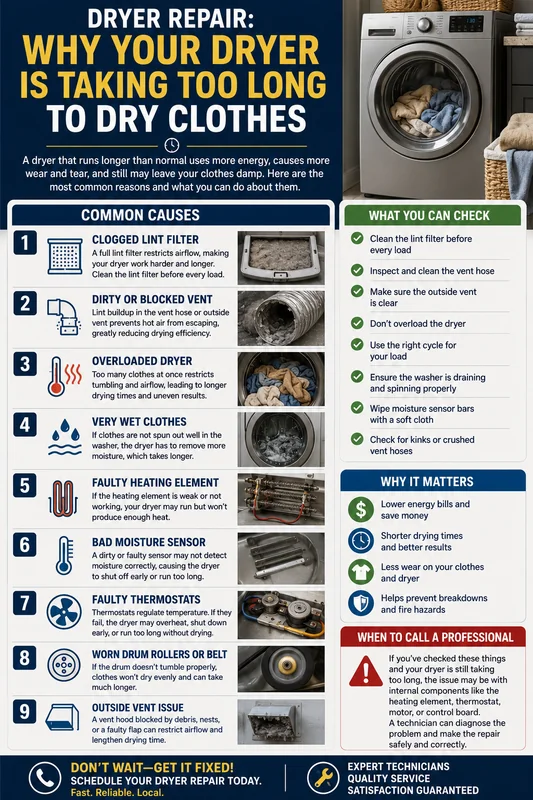
By far the most common reason a dryer takes too long to dry clothes is poor airflow caused by a clogged dryer vent.
Even if you clean the lint filter after every load, lint continues traveling into the vent system.
Over time, lint builds up inside:
- The vent hose
- Elbows in the ductwork
- Long horizontal vent runs
- The exterior vent hood
As airflow becomes restricted, moisture stays inside the dryer instead of being exhausted outdoors.
Common warning signs include:
- Clothes needing two or more cycles
- The dryer becoming unusually hot
- The laundry room feeling humid
- Higher energy bills
Regular vent cleaning is one of the simplest ways to improve dryer performance.
The Lint Filter May Be Cleaner Than It Looks
A lint screen can appear clean while still restricting airflow.
Fabric softener sheets and liquid fabric softeners often leave behind an invisible residue that blocks the fine mesh.
If water doesn’t pass easily through the lint screen, airflow is reduced.
Washing the lint filter occasionally with warm water and a small amount of dish soap helps remove residue and restore proper airflow.
The Heating Element May Be Failing
Electric dryers rely on a heating element to produce hot air.
As the element begins to wear out, it may still generate some heat—but not enough to dry clothes efficiently.
Symptoms include:
- Clothes remaining damp
- Longer drying times
- Warm, but not hot, air
- Heat that comes and goes
Eventually, the heating element may stop working altogether.
A Weak Gas Ignition System
Gas dryers use an igniter and gas valve system instead of an electric heating element.
If one of these components begins to fail, the burner may ignite only occasionally.
Possible symptoms include:
- Dryer tumbles normally
- Clothes stay damp
- Heat cycles inconsistently
- Drying time gradually increases
Professional testing can determine whether the igniter, flame sensor, or gas valve coils are responsible.
Moisture Sensors Can Wear Out
Many modern dryers automatically stop the cycle when the clothes are dry.
To do this, they rely on moisture sensors.
If the sensors become coated with fabric softener residue or begin malfunctioning, they may incorrectly detect that clothes are already dry.
This can cause:
- Short drying cycles
- Damp clothing
- Inconsistent performance
- Random cycle lengths
Cleaning the moisture sensors regularly helps maintain accurate operation.
The Blower Wheel May Be Damaged
The blower wheel pushes moist air through the vent system.
If it becomes loose, cracked, or clogged with lint, airflow decreases significantly.
Possible symptoms include:
- Weak airflow at the outside vent
- Longer drying times
- Rattling noises
- Reduced drying performance
A damaged blower wheel should be repaired before additional strain is placed on the motor.
Overloading the Dryer Slows Everything Down
Stuffing the dryer completely full may seem like a time saver, but it usually has the opposite effect.
Large loads:
- Restrict airflow
- Prevent proper tumbling
- Trap moisture between clothes
- Increase drying times
Smaller, properly sized loads dry faster and reduce wear on the appliance.
The Drum May Not Be Turning Properly
If the drum rotates slowly or intermittently, clothes won’t tumble through the hot air efficiently.
Possible causes include:
- Worn drive belts
- Failing drum rollers
- Weak motors
- Damaged idler pulleys
You may also notice unusual noises such as squealing, thumping, or grinding before the problem becomes more serious.
Outside Vent Blockages Are Easy to Miss
Many homeowners never inspect the outside dryer vent.
Bird nests, leaves, lint accumulation, or damaged vent flaps can all restrict airflow.
A properly functioning vent hood should open fully whenever the dryer is operating.
If it barely moves, airflow should be inspected.
Why Longer Drying Times Cost More Than You Think
Running multiple drying cycles affects more than your electric bill.
Extended operation increases wear on:
- Heating elements
- Motors
- Drum rollers
- Bearings
- Belts
- Electrical components
The longer the dryer operates with restricted airflow or weak heating, the greater the chance that additional parts will fail.
Simple Maintenance Can Prevent Many Dryer Problems
Keeping your dryer operating efficiently doesn’t require much time.
Here are a few simple habits that make a big difference:
- Clean the lint filter after every load.
- Wash the lint screen monthly to remove residue.
- Have the dryer vent professionally cleaned every one to two years.
- Avoid overloading the drum.
- Check that the outside vent opens freely.
- Listen for new or unusual noises.
Regular maintenance improves efficiency, lowers energy costs, and extends the life of the appliance.
When Should You Call a Professional for Dryer Repair?
If your dryer continues taking too long to dry clothes after you’ve cleaned the lint filter and confirmed the vent isn’t blocked, it’s time for a professional inspection.
Schedule dryer repair if you notice:
- Clothes remain damp after one cycle
- Drying times continue increasing
- Weak airflow
- No heat or inconsistent heat
- Burning odors
- Loud noises
- The dryer becomes excessively hot
- Error codes on the display
Early diagnosis often prevents more extensive repairs and helps restore safe, efficient operation.
Trust ACE Appliance Repair for Professional Dryer Repair
At ACE Appliance Repair, we repair all major dryer brands and diagnose drying problems every day. Our experienced technicians inspect the heating system, airflow, drum components, moisture sensors, and vent system to determine exactly why your dryer isn’t performing efficiently.
We believe in solving the root cause of the problem—not simply replacing parts. Whether your dryer needs vent maintenance, a heating element, gas ignition repair, or another component, we’ll provide honest recommendations and dependable workmanship.
If your dryer is taking too long to dry clothes, don’t waste time, energy, and money on extra cycles. Call ACE Appliance Repair today at (858) 412-3000 to schedule professional dryer repair and get your laundry routine back on track.