

Dishwasher Repair: Why Water Stays at the Bottom After Every Cycle
At the end of a normal wash cycle, your dishwasher should drain almost all of the water from the tub. If you open the door and find several inches of standing water at the bottom, it’s a clear sign that something isn’t working properly.
Many homeowners assume the dishwasher is simply getting old or that replacing it is the only solution. In reality, water that remains inside the dishwasher is usually caused by a drain restriction, a worn component, or a mechanical issue that can often be repaired.
Ignoring standing water isn’t a good idea. Besides leaving dishes less clean, it can create unpleasant odors, encourage mold growth, and eventually lead to leaks or pump damage.
Let’s look at the most common reasons your dishwasher isn’t draining properly.
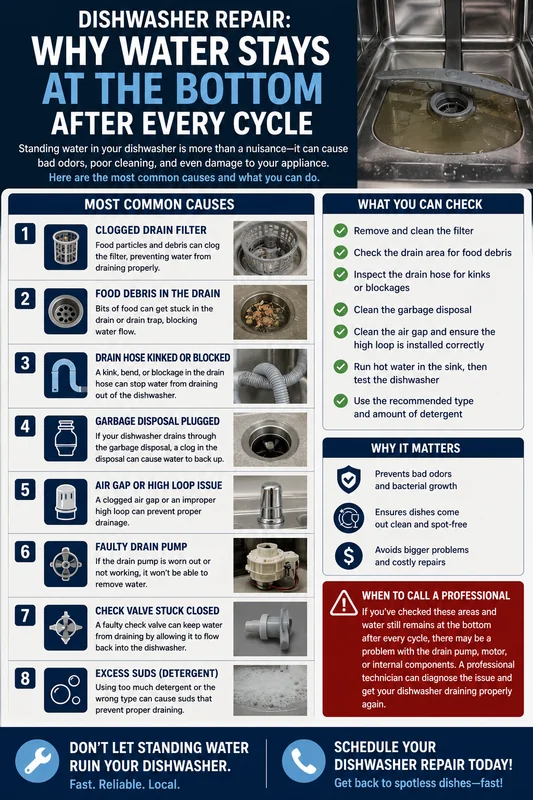
How Does a Dishwasher Drain?
A dishwasher removes dirty water several times during a wash cycle.
After washing the dishes, the drain pump forces water through a drain hose and into your home’s plumbing system, usually through the garbage disposal or kitchen sink drain.
If any part of this drainage path becomes blocked or stops working, water remains inside the tub.
Finding the exact point where drainage is interrupted is the key to a successful dishwasher repair.
A Clogged Filter Is the Most Common Cause
One of the simplest and most common causes of standing water is a dirty filter.
Most modern dishwashers use removable filters to trap food particles before they reach the drain pump.
Over time, these filters can become clogged with:
- Food residue
- Grease
- Paper labels
- Broken glass
- Small bones
- Mineral deposits
When the filter becomes restricted, water cannot flow freely through the drain system.
Cleaning the filter regularly is one of the easiest ways to prevent drainage problems.
The Drain Hose May Be Blocked
The drain hose carries wastewater from the dishwasher to your home’s plumbing.
Food debris, grease, or even a kinked hose can reduce or completely block water flow.
Signs of a blocked drain hose include:
- Standing water after every cycle
- Slow draining
- Gurgling sounds
- Dirty water returning to the dishwasher
A technician can inspect the hose for restrictions and verify that it has been installed correctly.
The Drain Pump May Be Failing
The drain pump is responsible for pushing wastewater out of the dishwasher.
Like any moving component, it can wear out after years of use.
Common symptoms include:
- Water remaining inside the tub
- Grinding or humming noises
- Slow draining
- Intermittent drainage problems
- Error codes related to draining
Sometimes debris becomes trapped inside the pump. In other cases, the motor itself has failed and needs replacement.
Your Garbage Disposal Could Be the Problem
Many homeowners don’t realize their dishwasher drains through the garbage disposal.
If a new garbage disposal was recently installed, the drain plug inside the disposal may not have been removed.
This completely blocks the dishwasher’s drain path.
Other disposal-related problems include:
- Food buildup
- Drain blockages
- Clogged sink plumbing
Checking the disposal connection is often part of a professional dishwasher diagnosis.
Air Gap Problems Can Restrict Drainage
Some homes have an air gap mounted next to the kitchen faucet.
Its purpose is to prevent dirty water from flowing back into the dishwasher.
If the air gap becomes clogged with food particles or grease, drainage slows dramatically.
Common signs include:
- Water backing up into the sink
- Water leaking from the air gap
- Standing water inside the dishwasher
Cleaning the air gap often restores normal drainage.
Broken Glass or Food Debris May Be Blocking the Pump
Small objects sometimes make their way into the drain system.
Technicians frequently remove:
- Glass fragments
- Toothpicks
- Popcorn kernels
- Fruit pits
- Bottle labels
- Plastic pieces
These objects can jam the drain pump or damage the impeller, preventing water from leaving the dishwasher completely.
The Check Valve May Be Stuck
Some dishwasher models include a check valve that prevents dirty water from flowing back into the appliance.
If this valve sticks open or becomes obstructed, wastewater may return to the bottom of the tub after the drain cycle finishes.
This often leaves homeowners wondering why clean dishes are sitting in dirty water.
Electronic Control Problems Can Affect Draining
Today’s dishwashers rely on electronic control boards to manage every stage of the wash cycle.
If the control board fails to activate the drain pump at the correct time, water may remain inside the appliance.
Possible symptoms include:
- Drain cycle not starting
- Random error codes
- Interrupted wash cycles
- Inconsistent draining
Professional diagnostics can determine whether the issue involves the control board or another electrical component.
Is Standing Water Ever Normal?
A small amount of clean water beneath the filter area is completely normal in many dishwasher models.
Manufacturers intentionally leave a small amount of water there to keep pump seals from drying out.
However, large puddles or several inches of water covering the bottom of the tub are not normal and should be investigated.
Why You Shouldn’t Ignore Standing Water
Allowing water to remain inside the dishwasher can lead to several problems over time.
These include:
- Mold and mildew growth
- Unpleasant odors
- Poor cleaning performance
- Pump damage
- Water leaks
- Additional drain blockages
Addressing the problem early usually prevents more expensive repairs later.
Simple Maintenance Can Help Prevent Drain Problems
A few minutes of routine maintenance can keep your dishwasher draining properly.
Good habits include:
- Clean the filter regularly.
- Scrape large food scraps from dishes.
- Run hot water in the sink before starting a cycle.
- Inspect the drain hose periodically.
- Clean the dishwasher with a dishwasher cleaner once a month.
- Avoid placing labels or paper products in the dishwasher.
These simple steps help maintain proper water flow and improve cleaning performance.
When Should You Call a Professional for Dishwasher Repair?
If you’ve cleaned the filter and the dishwasher still isn’t draining, it’s time for a professional inspection.
Schedule dishwasher repair if you notice:
- Water remaining after every cycle
- Dirty water backing up into the tub
- Grinding or humming during draining
- Water leaking from the dishwasher
- Error codes related to draining
- Slow drainage that continues getting worse
- Unpleasant odors caused by standing water
A professional technician can quickly determine whether the problem involves the drain pump, hose, filter, plumbing connection, or another component.
Trust ACE Appliance Repair for Professional Dishwasher Repair
At ACE Appliance Repair, we understand how frustrating it is to find standing water inside your dishwasher after every cycle. Our experienced technicians service all major dishwasher brands and use advanced diagnostic techniques to locate the exact cause of drainage problems. Whether the issue involves the drain pump, clogged hose, filter, air gap, or electronic controls, we’ll provide an honest assessment and a reliable repair.
If your dishwasher isn’t draining properly, don’t wait for odors, leaks, or pump damage to develop. Call ACE Appliance Repair today at (858) 412-3000 to schedule professional dishwasher repair and get your appliance back to cleaning and draining the way it should.