Heating Repair: Common Warning Signs Before a System Breakdown
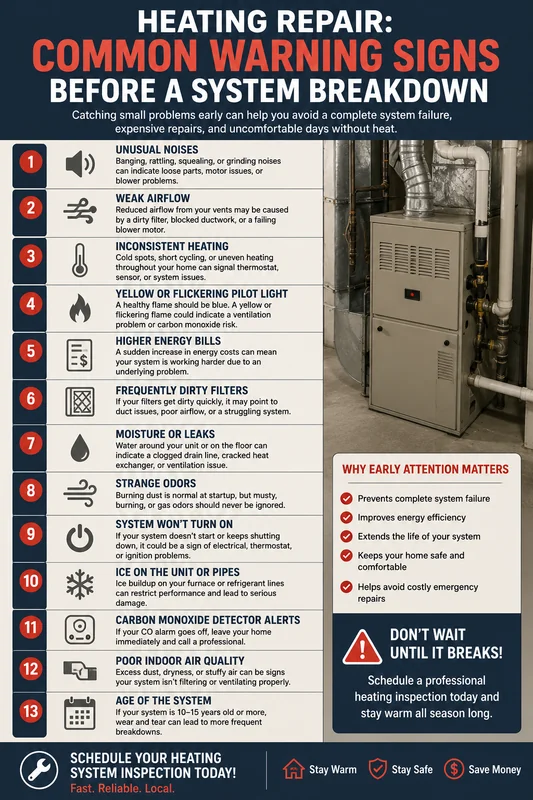
Your heating system rarely stops working without warning. In most cases, it begins showing subtle signs that something isn’t right long before it fails completely. A strange noise, longer heating cycles, or rooms that never seem to reach the desired temperature may not seem like major concerns at first, but they often indicate developing mechanical or electrical problems.
Unfortunately, many homeowners don’t call for service until the furnace refuses to turn on during the coldest night of the year. By then, what might have been a simple repair can become a much larger and more expensive job.
Learning to recognize the early warning signs can help you schedule heating repair before you’re left without heat when you need it most.
How Does a Home Heating System Work?
Whether your home uses a gas furnace or an electric heating system, the process is similar.
When the thermostat calls for heat, the system starts a sequence of operations that includes safety checks, ignition or heating element activation, blower operation, and warm air distribution throughout your home.
If any part of this process is interrupted, heating performance suffers.
Because all of these components depend on one another, even a small problem can affect the entire system.
Your Furnace Is Taking Longer to Heat the House
If your home feels colder than usual or your furnace seems to run much longer before reaching the thermostat setting, something may be reducing the system’s efficiency.
Possible causes include:
- Dirty air filters
- Restricted airflow
- Worn blower motors
- Failing flame sensors
- Weak igniters
- Aging components
Longer heating cycles increase energy consumption and place additional stress on the entire system.
Uneven Heating Throughout the Home
Do some rooms feel warm while others remain noticeably colder?
Uneven temperatures are one of the most common homeowner complaints.
This may result from:
- Airflow restrictions
- Blower motor problems
- Dirty ductwork
- Closed or blocked vents
- Thermostat issues
- Failing heating components
Consistent temperatures throughout the home usually indicate a healthy heating system.
Strange Noises Should Never Be Ignored
Every furnace produces some normal operating sounds.
However, new or unusual noises often signal developing mechanical problems.
Listen for:
- Banging
- Squealing
- Grinding
- Rattling
- Clicking
- Whistling
Each type of sound may point to a different issue, such as worn bearings, loose components, blower problems, or ignition issues.
Ignoring these noises often allows minor problems to become major repairs.
The Furnace Turns On and Off Repeatedly
Short cycling occurs when the furnace starts, runs briefly, then shuts off before properly heating the home.
Common causes include:
- Dirty air filters
- Overheating
- Thermostat problems
- Flame sensor issues
- Restricted airflow
- Electrical problems
Frequent cycling reduces efficiency and accelerates wear on important components.
Your Energy Bills Keep Increasing
If your heating habits haven’t changed but your utility bills continue rising, your furnace may be losing efficiency.
An aging or malfunctioning system often requires longer run times to produce the same amount of heat.
Several issues can contribute to higher energy consumption, including:
- Dirty burners
- Blower motor wear
- Restricted airflow
- Faulty sensors
- Poor combustion efficiency
Routine maintenance helps keep heating costs under control.
Weak Airflow From the Vents
If warm air barely reaches the rooms in your home, the problem may involve the blower system.
Possible causes include:
- Dirty air filters
- Failing blower motors
- Blocked ductwork
- Damaged blower wheels
- Electrical issues
Weak airflow often causes the furnace to work much harder while delivering less comfort.
Unusual Smells Coming From the Furnace
A brief burning smell when the furnace is first used each season is generally normal as dust burns away.
However, odors that continue or appear during normal operation should be investigated.
Watch for:
- Burning electrical smells
- Strong gas odors
- Musty odors
- Overheated wiring smells
If you ever smell natural gas, leave the area immediately and contact your gas utility before restarting the furnace.
The Pilot Light or Flame Looks Different
For gas furnaces equipped with a visible burner flame, the flame should typically appear steady and blue.
If you notice:
- Yellow flames
- Flickering flames
- Delayed ignition
- Frequent ignition failures
the system should be inspected promptly.
Combustion problems not only reduce efficiency but can also affect safe operation.
The Thermostat Doesn’t Match the Room Temperature
Sometimes the heating system isn’t the problem.
A faulty thermostat may cause:
- Incorrect temperature readings
- Constant operation
- Frequent cycling
- Rooms feeling colder than the thermostat indicates
Modern programmable and smart thermostats also rely on sensors that can occasionally fail or lose calibration.
Frequent System Resets
If you’re constantly resetting your heating system to restore operation, the furnace is experiencing an underlying problem.
Temporary resets rarely solve the actual issue.
Repeated shutdowns may involve:
- Safety switches
- Overheating
- Ignition failures
- Electrical faults
- Sensor malfunctions
Professional diagnosis is the safest approach.
How Regular Maintenance Helps Prevent Breakdowns
Many heating failures can be avoided with annual maintenance.
Routine inspections allow technicians to identify worn components before they fail completely.
Preventive maintenance typically includes:
- Replacing or cleaning air filters
- Inspecting burners
- Checking ignition components
- Testing safety controls
- Cleaning blower assemblies
- Inspecting electrical connections
- Verifying proper airflow
Annual maintenance improves reliability while helping the system operate more efficiently.
When Should You Call a Professional for Heating Repair?
If your heating system begins showing any unusual symptoms, it’s best not to wait until it stops working completely.
Professional heating repair is recommended if you notice:
- Longer heating cycles
- Uneven room temperatures
- Loud or unusual noises
- Weak airflow
- Frequent cycling
- Burning odors
- Rising energy bills
- The furnace failing to maintain the thermostat setting
Early diagnosis often prevents emergency breakdowns during the coldest weather.
Trust ACE Appliance Repair for Professional Heating Repair
At ACE Appliance Repair, we understand how important dependable heat is for your family’s comfort and safety. Our experienced technicians diagnose heating problems quickly, explain the cause in clear, straightforward language, and perform reliable repairs on a wide range of residential heating systems.
Whether the issue involves the blower motor, ignition system, thermostat, electrical components, or airflow restrictions, we’ll identify the problem and recommend the most effective solution.
If your heating system is showing signs of trouble, don’t wait until you’re left without heat. Call ACE Appliance Repair today at (858) 412-3000 to schedule professional heating repair and keep your home warm, safe, and comfortable all season long.