
Refrigerator Repair: Why Your Freezer Is Cold but the Fresh Food Section Is Warm
One of the most confusing refrigerator problems homeowners encounter is when the freezer continues to keep food frozen, but the fresh food compartment becomes warm. Ice cream stays solid, frozen vegetables are fine, yet milk spoils, drinks aren’t cold, and leftovers quickly become unsafe to eat.
Many people immediately assume the compressor has failed or that the refrigerator needs to be replaced. In reality, this symptom is rarely caused by the compressor alone. More often, the problem involves airflow, the defrost system, or one of the components responsible for moving cold air from the freezer into the refrigerator section.
The good news is that many of these issues can be repaired if they’re diagnosed early.
How Your Refrigerator Cools Both Compartments
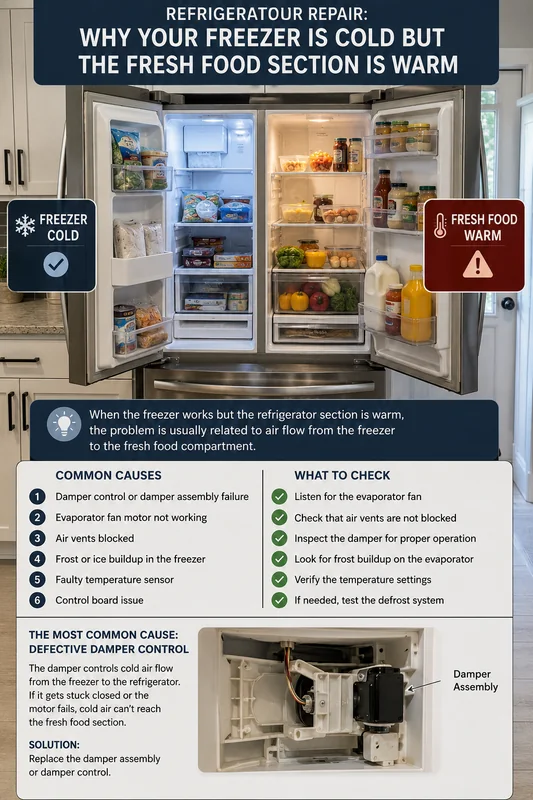
Most modern refrigerators have only one cooling system, and it is located in the freezer.
Cold air is produced around the evaporator coils inside the freezer, then a fan pushes that cold air into the fresh food compartment through a series of air ducts and vents.
If anything blocks that airflow or prevents the fan from operating correctly, the freezer may continue freezing food while the refrigerator gradually becomes warmer.
That’s why airflow problems are among the most common causes of this type of cooling issue.
A Failed Evaporator Fan Motor
The evaporator fan is responsible for circulating cold air throughout the refrigerator.
If this fan stops working, cold air remains trapped inside the freezer instead of reaching the refrigerator compartment.
Common signs include:
- Freezer stays cold.
- Refrigerator section becomes warm.
- Weak or no airflow from the refrigerator vents.
- Unusual humming or squealing noises.
- Food spoils even though the freezer appears normal.
Because the fan operates almost continuously, it naturally wears over time and is one of the more common refrigerator repairs.
Frost Is Blocking the Airflow
Heavy frost buildup behind the rear freezer panel is another frequent cause of poor cooling.
Normally, your refrigerator automatically melts frost during scheduled defrost cycles. If part of the defrost system fails, ice begins covering the evaporator coils.
Eventually, the fan can no longer move enough air through the coils, leaving the refrigerator compartment without adequate cooling.
Possible causes include:
- Failed defrost heater
- Faulty defrost thermostat
- Defective temperature sensor
- Electronic control board problems
If frost continues building up, cooling performance will usually get worse with each passing day.
The Air Damper May Be Stuck
Many refrigerators use an air damper to regulate how much cold air enters the fresh food section.
When the refrigerator needs cooling, the damper opens. Once the desired temperature is reached, it partially closes.
If the damper becomes stuck in the closed position, very little cold air reaches the refrigerator.
Symptoms often include:
- Warm refrigerator compartment
- Proper freezer temperatures
- Little airflow from the vents
- Uneven temperatures on different shelves
A damaged air damper is often overlooked because it’s hidden behind interior panels.
Blocked Air Vents Can Restrict Circulation
Sometimes the problem isn’t mechanical at all.
Overpacking the refrigerator or freezer can block the vents that distribute cold air.
Large containers, grocery bags, or food stacked directly against the vents may prevent proper circulation.
To improve airflow:
- Leave space around the vents.
- Avoid pressing food against the back wall.
- Don’t completely fill every shelf.
- Keep freezer vents clear as well.
Good air circulation is essential for maintaining even temperatures.
Dirty Condenser Coils Can Reduce Cooling Efficiency
Although dirty condenser coils usually affect both compartments, they can sometimes make airflow-related problems more noticeable.
Dust, lint, and pet hair prevent the condenser from releasing heat efficiently.
As a result:
- The compressor runs longer.
- Cooling efficiency decreases.
- Refrigerator temperatures begin to rise.
- Energy consumption increases.
Cleaning the condenser coils every six to twelve months helps the entire cooling system operate more efficiently.
A Faulty Temperature Sensor
Modern refrigerators rely on multiple sensors to monitor temperatures.
If a sensor provides inaccurate information, the control board may believe the refrigerator is already cold enough when it actually isn’t.
Possible symptoms include:
- Refrigerator warmer than the selected temperature.
- Inconsistent cooling.
- Short cycling.
- Error codes.
- Random temperature fluctuations.
Professional diagnostic equipment can quickly determine whether a sensor is functioning correctly.
The Control Board May Not Be Operating the Cooling System Correctly
Electronic control boards coordinate the operation of fans, dampers, compressors, and defrost cycles.
When the control board begins to fail, several cooling functions may become inconsistent.
Possible warning signs include:
- Intermittent cooling.
- Fan motors not operating.
- Error codes on the display.
- Temperature changes throughout the day.
- Cooling that temporarily returns before failing again.
Although control board failures are less common than fan or defrost problems, they can produce very similar symptoms.
Could It Be the Compressor?
Yes—but not as often as many homeowners think.
A weak compressor typically affects both the freezer and refrigerator compartments.
If your freezer is still maintaining proper freezing temperatures while only the fresh food section is warm, the compressor is often doing its job.
That’s why replacing the compressor without proper diagnosis can become an expensive mistake.
Professional testing identifies whether the problem involves airflow, electronics, or the sealed refrigeration system.
Why You Shouldn’t Ignore This Problem
Some homeowners continue using the refrigerator because the freezer still appears to be working.
Unfortunately, food stored in the refrigerator compartment may quickly enter the temperature “danger zone,” where bacteria multiply much faster.
Delaying repairs can result in:
- Spoiled groceries
- Higher energy bills
- Additional component wear
- More extensive cooling problems
- More expensive repairs
Addressing the issue early usually saves both food and money.
Simple Maintenance That Helps Prevent Cooling Problems
Routine maintenance can reduce the likelihood of airflow and cooling issues.
Good habits include:
- Clean the condenser coils twice a year.
- Keep refrigerator and freezer vents unobstructed.
- Avoid overpacking the shelves.
- Check that the doors seal tightly.
- Listen for changes in fan noise.
- Schedule service if cooling performance changes.
A well-maintained refrigerator is less likely to experience major cooling failures.
When Should You Call a Professional for Refrigerator Repair?
If your freezer is cold but the refrigerator compartment remains warm for more than a few hours, it’s time for a professional inspection.
Schedule refrigerator repair if you notice:
- Food spoiling faster than usual.
- Weak airflow from the refrigerator vents.
- Frost buildup inside the freezer.
- The compressor running constantly.
- Unusual fan noises.
- Error codes on the display.
- Temperatures that continue to rise.
Early diagnosis often prevents more serious damage and helps restore proper cooling before the problem worsens.
Trust ACE Appliance Repair for Professional Refrigerator Repair
At ACE Appliance Repair, we diagnose refrigerator cooling problems every day. Our experienced technicians service all major refrigerator brands and quickly determine whether the issue involves the evaporator fan, defrost system, air damper, electronic controls, or another component affecting airflow.
We believe in fixing the actual problem—not replacing expensive parts based on guesswork. You’ll receive honest recommendations, quality workmanship, and reliable service from technicians who understand today’s advanced refrigeration systems.
If your freezer is still cold but the fresh food section has stopped cooling properly, don’t wait until your groceries are ruined. Call ACE Appliance Repair today at (858) 412-3000 to schedule professional refrigerator repair and restore your refrigerator’s performance.