
Refrigerator Repair: Why Your Refrigerator Is Not Cooling Properly
Few household problems are as frustrating as opening your refrigerator and discovering that the food isn’t cold. Milk spoils sooner than expected, leftovers become unsafe to eat, and fresh produce loses its crispness. In many cases, homeowners don’t notice the problem until groceries worth hundreds of dollars are already at risk.
A refrigerator that isn’t cooling properly doesn’t always need to be replaced. In fact, many cooling issues are caused by worn parts, restricted airflow, or maintenance problems that can be repaired without replacing the appliance.
The key is recognizing the warning signs early and understanding what may be causing the problem.
How Does a Refrigerator Keep Food Cold?
Your refrigerator works by continuously removing heat from inside the cabinet and releasing it outside the appliance. Several components work together to make this happen, including the compressor, condenser coils, evaporator fan, temperature sensors, and electronic controls.
If even one of these components stops working correctly, the cooling system becomes less efficient, and temperatures begin to rise.
Because every part of the system depends on the others, diagnosing the exact cause requires more than simply checking whether the refrigerator is running.
Check the Temperature Settings First
Before assuming there’s a mechanical problem, make sure the refrigerator hasn’t been accidentally set to the wrong temperature.
Children, cleaning, or simply bumping the control panel can sometimes change the settings without anyone noticing.
For most refrigerators, the recommended temperatures are:
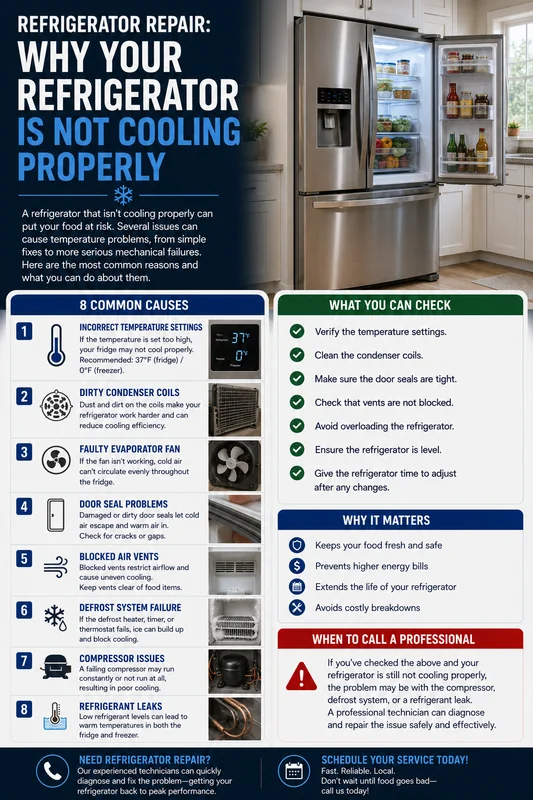
- Refrigerator compartment: 37°F
- Freezer compartment: 0°F
If the settings are correct but the refrigerator still isn’t cooling after several hours, it’s time to look deeper.
Dirty Condenser Coils Can Reduce Cooling Performance
One of the most overlooked causes of poor cooling is dirty condenser coils.
These coils release heat removed from inside the refrigerator. When they become covered with dust, pet hair, and debris, heat cannot escape efficiently.
As a result, the compressor must work much harder, which can lead to:
- Warmer refrigerator temperatures
- Longer running times
- Higher energy bills
- Premature compressor wear
Cleaning the condenser coils every six to twelve months is one of the easiest ways to improve refrigerator performance and extend its lifespan.
The Evaporator Fan May Have Stopped Working
The evaporator fan circulates cold air from the freezer into the fresh food compartment.
If this fan fails, the freezer may remain relatively cold while the refrigerator section becomes noticeably warmer.
Common symptoms include:
- Freezer still freezing food
- Refrigerator compartment warming up
- Weak airflow from the refrigerator vents
- Unusual buzzing or squealing sounds
A faulty evaporator fan is one of the most common refrigerator repairs and should be addressed before food begins to spoil.
Frost Buildup Can Block Cold Air
If you’ve noticed a layer of frost on the back wall of the freezer, your refrigerator may have a defrost system problem.
As frost accumulates around the evaporator coils, airflow becomes restricted.
Eventually, cold air can no longer circulate properly throughout the appliance.
Possible causes include:
- Failed defrost heater
- Defective defrost thermostat
- Faulty defrost control board
- Malfunctioning temperature sensor
Ignoring heavy frost buildup can eventually stop cooling altogether.
Worn Door Gaskets Allow Cold Air to Escape
The rubber door gasket forms an airtight seal every time you close the refrigerator door.
Over time, these seals can crack, tear, flatten, or become coated with dirt.
When warm air leaks inside, the refrigerator must run longer to maintain temperature.
Signs of a worn door seal include:
- Moisture around the door
- Condensation inside the refrigerator
- Frost near the door opening
- Doors that don’t close tightly
Replacing damaged door gaskets improves efficiency and reduces unnecessary strain on the cooling system.
A Failing Compressor May Be the Problem
The compressor is responsible for circulating refrigerant throughout the sealed cooling system.
When it begins to fail, cooling performance often declines gradually.
Warning signs include:
- Refrigerator running constantly
- Food not staying cold
- Clicking noises near the compressor
- Temperature fluctuations
- Warm refrigerator and freezer compartments
However, compressor failure is less common than many homeowners believe. Several electrical components can produce similar symptoms, making professional diagnosis essential before replacing such an expensive part.
Low Refrigerant or Sealed System Problems
Unlike automotive air conditioning systems, refrigerators do not consume refrigerant during normal operation.
If refrigerant levels become low, there is almost always a leak somewhere within the sealed system.
Possible symptoms include:
- Gradual loss of cooling
- Compressor running continuously
- Only part of the evaporator coil becoming cold
- Refrigerator never reaching the selected temperature
Because sealed system repairs require specialized equipment and certification, they should always be handled by qualified technicians.
Electronic Control Problems Can Affect Cooling
Today’s refrigerators rely on sophisticated electronic controls to manage temperatures, fan operation, and compressor cycles.
When a control board or sensor begins to fail, the refrigerator may receive incorrect temperature information.
This can cause:
- Inconsistent cooling
- Error codes on the display
- Intermittent operation
- Fans not running when needed
- Compressor cycling at the wrong times
Electronic diagnostics often identify these problems quickly.
Too Much Food Can Restrict Airflow
Many homeowners believe a completely full refrigerator operates more efficiently.
While a reasonably stocked refrigerator performs well, overpacking can block internal air vents and prevent cold air from circulating.
To improve airflow:
- Leave space around air vents.
- Avoid pressing food against the back wall.
- Organize shelves to allow air movement.
- Do not block the freezer vents.
Proper airflow helps maintain even temperatures throughout both compartments.
Why You Shouldn’t Ignore Cooling Problems
A refrigerator rarely stops cooling without warning.
Most appliances show gradual signs of trouble first.
Waiting too long can result in:
- Food spoilage
- Higher utility bills
- Compressor damage
- Additional component failures
- More expensive repairs
Addressing small problems early often prevents major breakdowns.
Simple Maintenance That Helps Your Refrigerator Last Longer
Regular maintenance can significantly improve refrigerator performance and reliability.
Here are a few simple habits that make a difference:
- Clean the condenser coils twice a year.
- Check that the door seals close tightly.
- Keep vents inside the refrigerator clear.
- Set the correct temperatures.
- Avoid leaving the doors open for extended periods.
- Listen for new or unusual noises.
These simple steps reduce strain on the cooling system and help your refrigerator operate more efficiently.
When Should You Call a Professional for Refrigerator Repair?
If basic maintenance doesn’t solve the problem, professional service is the safest and most cost-effective option.
Schedule refrigerator repair if you notice:
- The refrigerator isn’t cooling properly.
- Food spoils faster than usual.
- The compressor runs continuously.
- Frost builds up inside the freezer.
- The refrigerator section is warm while the freezer is cold.
- Water is leaking inside or beneath the appliance.
- The refrigerator displays error codes.
- Cooling performance continues to decline.
Prompt diagnosis often prevents additional damage and extends the life of the appliance.
Trust ACE Appliance Repair for Expert Refrigerator Repair
At ACE Appliance Repair, we understand how important a reliable refrigerator is to your home. Our experienced technicians diagnose cooling problems on all major refrigerator brands, identify the true cause of the issue, and recommend repairs that make sense for both your appliance and your budget.
Whether the problem involves the compressor, evaporator fan, defrost system, electronic controls, or another cooling component, we’re committed to providing honest recommendations and dependable workmanship.
If your refrigerator isn’t cooling properly, don’t wait until all your groceries are lost. Call ACE Appliance Repair today at (858) 412-3000 to schedule professional refrigerator repair and get your kitchen back to normal.