
Refrigerator Repair: Signs Your Compressor May Be Failing
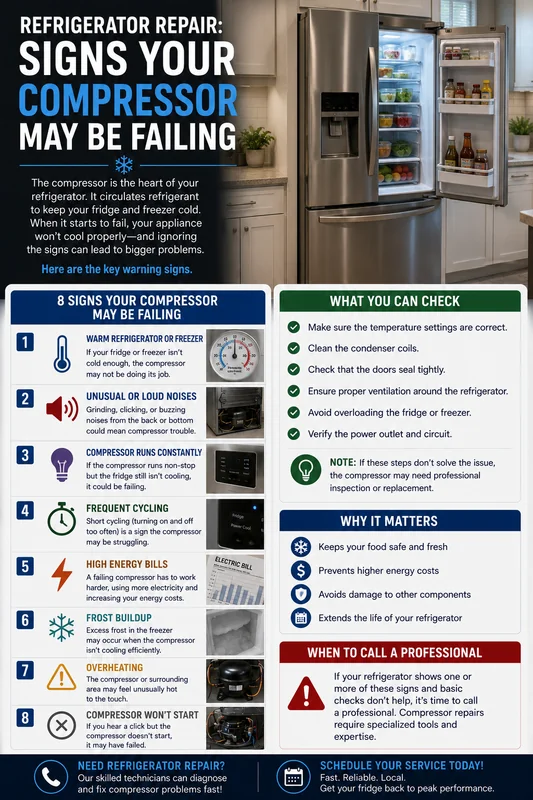
The compressor is often called the heart of a refrigerator, and for good reason. It continuously circulates refrigerant through the cooling system, allowing your refrigerator and freezer to maintain safe temperatures. When the compressor begins to fail, the entire cooling process is affected, putting your food at risk and often leading to expensive repairs if the problem is ignored.
Many homeowners assume a refrigerator that isn’t cooling properly automatically needs a new compressor. In reality, that’s not always the case. Several other components can produce similar symptoms, which is why professional diagnosis is so important.
Knowing the early signs of compressor failure can help you act before a complete breakdown occurs.
What Does a Refrigerator Compressor Do?
The compressor pumps refrigerant through the sealed cooling system. As the refrigerant moves through the condenser and evaporator coils, it absorbs heat from inside the refrigerator and releases it outside the appliance.
Without a properly functioning compressor, the refrigerator cannot remove heat efficiently, and temperatures begin to rise.
Because the compressor works every day of the year, it’s one of the hardest-working components inside the appliance.
The Refrigerator Is Running but Not Cooling
One of the first warning signs of compressor trouble is poor cooling performance.
You may notice that milk spoils faster than usual, vegetables lose freshness, or beverages are no longer cold enough, even though the refrigerator seems to be running constantly.
In some cases, the freezer may still produce some cold air while the fresh food compartment becomes noticeably warmer. In others, both sections gradually lose cooling altogether.
While these symptoms can indicate compressor problems, they may also be caused by airflow restrictions, dirty condenser coils, faulty fans, or thermostat issues. A complete diagnosis is essential before replacing any major component.
The Compressor Runs Constantly
Modern refrigerators cycle on and off throughout the day to maintain consistent temperatures.
If the compressor rarely shuts off, it’s working much harder than normal.
Continuous operation may be caused by:
- A weakening compressor
- Dirty condenser coils
- Refrigerant problems
- Door gasket leaks
- Temperature sensor failures
- Electronic control board issues
Running nonstop not only increases energy consumption but also accelerates wear on the entire cooling system.
Clicking Sounds Followed by Silence
A healthy compressor starts smoothly and continues running for several minutes.
If you hear repeated clicking every few minutes followed by silence, the compressor may be attempting to start but failing.
This symptom is commonly associated with:
- A failing start relay
- A weak start capacitor
- Internal compressor damage
- Electrical problems
Fortunately, not every clicking compressor requires replacement. Sometimes replacing the start components restores normal operation, making professional testing especially valuable.
The Freezer Is Cold but the Refrigerator Is Warm
Many homeowners immediately suspect a compressor failure when they discover frozen food is still solid while the refrigerator section feels warm.
In reality, this symptom is usually caused by airflow problems rather than the compressor itself.
Common causes include:
- A failed evaporator fan motor
- Frost blocking the evaporator coils
- Defrost system failures
- Air damper issues
Because compressor failure can produce similar symptoms in some situations, proper diagnosis prevents unnecessary repairs.
Food Takes Longer to Cool
You may notice groceries remain warm for several hours after being placed inside the refrigerator.
Ice cream becomes softer.
Bottled drinks never reach their usual temperature.
These gradual changes often appear weeks before complete cooling failure.
Monitoring these small differences can help catch developing problems early.
Unusual Noises Coming from the Compressor Area
Compressors naturally produce a low humming sound during normal operation.
However, new noises should never be ignored.
Warning sounds include:
- Loud buzzing
- Repeated clicking
- Metallic knocking
- Rattling
- Deep humming that becomes unusually loud
These noises can indicate internal wear, mounting issues, or electrical components struggling to start the compressor.
The Compressor Feels Extremely Hot
Compressors become warm during normal operation, but they should never become excessively hot.
If the compressor overheats repeatedly, the refrigerator may shut itself down temporarily to prevent permanent damage.
Overheating may result from:
- Dirty condenser coils
- Poor ventilation
- Weak cooling fans
- Electrical problems
- Internal compressor wear
Keeping the condenser area clean can significantly reduce operating temperatures.
Refrigerator Temperatures Fluctuate Throughout the Day
A failing compressor may struggle to maintain stable cooling.
You might notice:
- Food freezing unexpectedly
- Temperatures changing throughout the day
- Warm periods followed by temporary cooling
- Ice melting and refreezing
Temperature instability often indicates the cooling system is no longer operating efficiently.
Can a Compressor Be Repaired?
In most cases, compressors themselves are not repaired.
However, several related components can fail while the compressor remains perfectly healthy.
Examples include:
- Start relays
- Start capacitors
- Overload protectors
- Electronic control boards
- Temperature sensors
Replacing one of these components is often much less expensive than replacing the compressor itself.
This is why accurate diagnosis should always come before major repairs.
Is Compressor Replacement Worth It?
Whether compressor replacement makes financial sense depends on several factors.
Technicians typically consider:
- The age of the refrigerator
- Overall condition of the appliance
- Brand and model
- Warranty coverage
- Cost of replacement compared to a new refrigerator
Many premium refrigerators are excellent candidates for compressor replacement, while older entry-level models may be more economical to replace.
A qualified technician can explain your options and help you make the best long-term decision.
How to Extend Compressor Life
While no compressor lasts forever, proper maintenance can significantly improve its lifespan.
Helpful maintenance tips include:
- Clean condenser coils every six to twelve months.
- Keep air vents inside the refrigerator unobstructed.
- Make sure the door seals tightly.
- Avoid leaving the doors open longer than necessary.
- Provide adequate clearance around the refrigerator for ventilation.
- Schedule service if cooling performance begins to change.
Simple maintenance reduces stress on the compressor and improves energy efficiency.
When Should You Call a Professional for Refrigerator Repair?
If your refrigerator isn’t cooling properly, don’t assume the compressor has failed.
Professional diagnosis is recommended if you notice:
- Constant running
- Repeated clicking sounds
- Rising refrigerator temperatures
- Food spoiling too quickly
- Unusual compressor noises
- Temperature fluctuations
- Cooling that becomes progressively worse
Finding the exact cause early can often prevent additional damage and reduce repair costs.
Trust ACE Appliance Repair for Professional Refrigerator Repair
At ACE Appliance Repair, we diagnose refrigerator cooling problems every day. Our experienced technicians service all major refrigerator brands and accurately determine whether the issue involves the compressor, start components, electronic controls, airflow, or another part of the cooling system.
We believe homeowners deserve honest recommendations based on proper diagnostics, not unnecessary part replacements.
If your refrigerator is showing signs of compressor trouble or simply isn’t cooling the way it should, call ACE Appliance Repair at (858) 412-3000. We’ll identify the problem, explain your options, and help keep your refrigerator running reliably for years to come.