

Washer Repair: Why Your Washer Is Shaking Violently During Spin Cycle
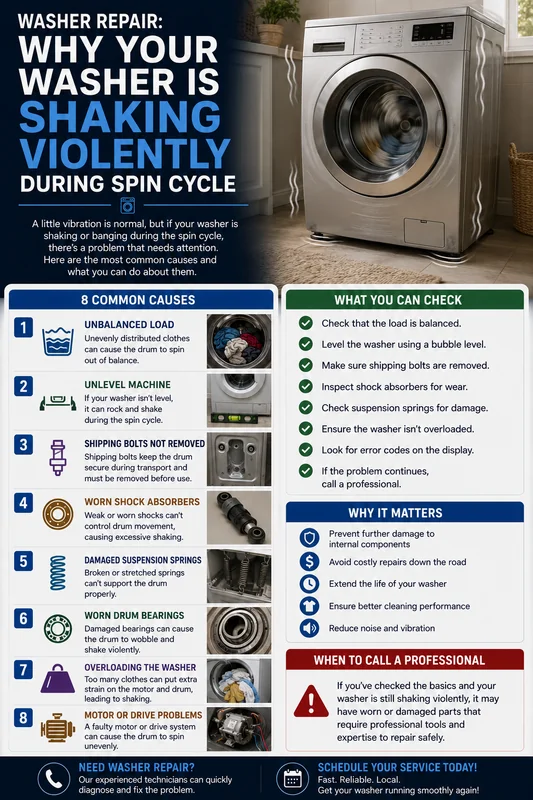
A washing machine should vibrate slightly during the spin cycle, but it should never shake so violently that it rattles the walls, walks across the laundry room, or sounds like it’s about to fall apart. If your washer suddenly starts shaking excessively, it’s a clear sign that something isn’t working as it should.
Many homeowners assume this happens simply because the machine is getting older, but in reality, excessive vibration is often caused by a specific mechanical issue that can be diagnosed and repaired. Ignoring the problem may lead to additional damage, more expensive repairs, and even water leaks.
Understanding the most common causes of a shaking washer can help you protect your appliance and avoid unnecessary breakdowns.
Why Does a Washing Machine Shake During the Spin Cycle?
During the spin cycle, your washer can rotate the drum at speeds of 800 to more than 1,200 RPM. At these high speeds, even a small imbalance or worn component can create significant vibration.
While a small amount of movement is completely normal, violent shaking is not. If your washer begins bouncing, banging loudly, or moving across the floor, it’s time to identify the cause before the problem becomes more serious.
An Unbalanced Load Is the Most Common Cause
One of the simplest reasons for excessive vibration is an uneven load inside the drum.
Large blankets, comforters, rugs, or a single heavy item can shift to one side during spinning. When this happens, the washer struggles to balance the load, causing severe shaking.
You can often solve this by:
- Redistributing the clothes evenly
- Washing bulky items with additional towels for balance
- Avoiding overloading or underloading the washer
- Using the correct wash cycle for large items
If your washer only shakes occasionally, the load itself may be the only problem.
Your Washer May No Longer Be Level
Even a perfectly functioning washing machine cannot spin properly if it isn’t sitting level on the floor.
Over time, vibrations may loosen the adjustable feet or cause the appliance to shift slightly.
Signs of an unlevel washer include:
- Rocking when pushed by hand
- One corner sitting higher than the others
- Constant vibration on every load
- Walking across the laundry room floor
A simple leveling adjustment often restores smooth operation and reduces unnecessary stress on internal components.
Worn Suspension Rods Can No Longer Control Movement
Top-load washers use suspension rods to stabilize the tub during high-speed spinning.
After years of use, these rods lose their ability to absorb movement.
Common symptoms include:
- Violent bouncing during spin
- Loud banging inside the cabinet
- Tub leaning to one side
- Washer stopping because it detects an out-of-balance condition
Replacing worn suspension rods is a common washer repair that restores proper stability.
Shock Absorbers Wear Out Over Time
Front-load washers rely on shock absorbers instead of suspension rods.
These components absorb the energy generated during spinning. As they wear, the drum begins moving excessively.
Typical symptoms include:
- Heavy shaking during high-speed spin
- Loud knocking sounds
- Increased vibration with every wash
- Visible movement of the entire cabinet
Replacing worn shocks often makes a dramatic difference in washer performance.
Damaged Tub Bearings Create More Than Just Noise
Tub bearings allow the inner basket to rotate smoothly.
As bearings wear, they create additional resistance and instability.
Early warning signs include:
- Rumbling during spin
- Grinding noises
- Water leaking beneath the washer
- Increasing vibration over time
Bearing replacement is a more involved repair that should be addressed before further damage occurs to the tub or drive system.
Shipping Bolts May Still Be Installed
This issue is surprisingly common with newly installed front-load washers.
Manufacturers install shipping bolts to secure the drum during transportation. If they are not removed before first use, the washer cannot absorb vibration correctly.
Symptoms include:
- Extreme shaking from the very first load
- Loud banging
- Excessive movement even with small loads
Removing the shipping bolts immediately solves the problem and prevents permanent damage.
Worn Dampening Components Can Affect Stability
Many washers include additional dampers, springs, or counterweights that help stabilize the drum.
Over time, these components can loosen or wear out.
A technician may discover:
- Loose concrete counterweights
- Broken support springs
- Worn dampers
- Damaged mounting brackets
These parts work together to keep the drum centered throughout the wash cycle.
The Floor Itself May Be the Problem
Sometimes the washer isn’t at fault.
Wood floors, raised platforms, or older laundry rooms may flex during high-speed spinning, making vibration much worse.
Concrete floors generally provide the best stability, while flexible flooring can amplify normal machine movement.
If the floor moves noticeably while the washer is spinning, additional reinforcement may be necessary.
Can You Keep Using a Shaking Washer?
Many homeowners continue using a shaking washer because it still completes the cycle.
Unfortunately, excessive vibration places constant stress on nearly every major component inside the appliance.
Ignoring the problem can lead to:
- Broken suspension parts
- Cracked outer tubs
- Water leaks
- Damaged hoses
- Motor strain
- Premature bearing failure
- Costlier future repairs
Addressing the issue early is almost always less expensive than waiting for multiple components to fail.
Simple Maintenance Tips to Prevent Excessive Vibration
Regular maintenance can help extend the life of your washing machine.
Some good habits include:
- Never overload the washer.
- Wash bulky items using the proper cycle.
- Check that all four feet remain level.
- Inspect the floor for movement.
- Clean the machine regularly to reduce unnecessary wear.
- Listen for new noises that develop over time.
Small maintenance steps often prevent much larger repair bills.
When Should You Call a Professional for Washer Repair?
If your washer continues shaking after redistributing the load and confirming it is level, the problem likely involves internal suspension or drive components.
Professional diagnosis is recommended if you notice:
- Violent shaking during every spin cycle
- Loud banging or grinding noises
- Water leaking underneath the washer
- The washer moving across the floor
- Error codes related to balance or spinning
- The drum leaning noticeably inside the cabinet
A qualified technician can identify the exact cause and recommend the most cost-effective repair before additional damage occurs.
Trust ACE Appliance Repair for Reliable Washer Repair
At ACE Appliance Repair, we understand how frustrating an unstable washing machine can be. Our experienced technicians diagnose all major washer brands quickly and accurately, helping homeowners avoid unnecessary part replacements and costly repeat repairs.
Whether your washer needs suspension components, shock absorbers, bearings, or a complete diagnostic inspection, we’ll explain the problem clearly and perform the repair with quality workmanship.
If your washing machine is shaking violently during the spin cycle, don’t wait until a small issue becomes a major repair. Call ACE Appliance Repair today at (858) 412-3000 to schedule professional washer repair and get your laundry routine back to normal.