
Demo Post Three
H2 - How the Washer Detects Water Level
A washing machine relies on precise internal communication to perform each stage of the cycle correctly. One of the most critical components responsible for that accuracy is the water level detection system. When your washer stops recognizing how much water is inside the drum, the entire wash cycle becomes unreliable. You may notice the machine overfilling, underfilling, stopping mid-cycle, refusing to start, or showing unexplained error codes. All these symptoms often point to a single issue: a malfunctioning pressure sensor or a kinked pressure hose. Understanding how these components work and what happens when something disrupts them can help you act quickly, prevent damage, and avoid costly repairs in the future.

A washing machine relies on precise internal communication to perform each stage of the cycle correctly. One of the most critical components responsible for that accuracy is the water level detection system. When your washer stops recognizing how much water is inside the drum, the entire wash cycle becomes unreliable. You may notice the machine overfilling, underfilling, stopping mid-cycle, refusing to start, or showing unexplained error codes.
All these symptoms often point to a single issue: a malfunctioning pressure sensor or a kinked pressure hose. Understanding how these components work and what happens when something disrupts them can help you act quickly, prevent damage, and avoid costly repairs in the future.
A washing machine relies on precise internal communication to perform each stage of the cycle correctly. One of the most critical components responsible for that accuracy is the water level detection system. When your washer stops recognizing how much water is inside the drum, the entire wash cycle becomes unreliable. You may notice the machine overfilling, underfilling, stopping mid-cycle, refusing to start, or showing unexplained error codes. All these symptoms often point to a single issue: a malfunctioning pressure sensor or a kinked pressure hose. Understanding how these components work and what happens when something disrupts them can help you act quickly, prevent damage, and avoid costly repairs in the future.
H3 - Signs the Washer Is Not Detecting the Water Level Correctly
Several symptoms may appear, depending on the nature of the malfunction:
- The washer fills with too much or too little water
- The machine refuses to start a cycle
- The cycle stops unexpectedly
- Water continues running even when the drum is full
- The washer drains immediately after filling
- Repeated error codes related to water level or pressure
- Clothing comes out poorly washed because the water level was incorrect
H3 - Common Cause 1: A Malfunctioning Pressure Sensor
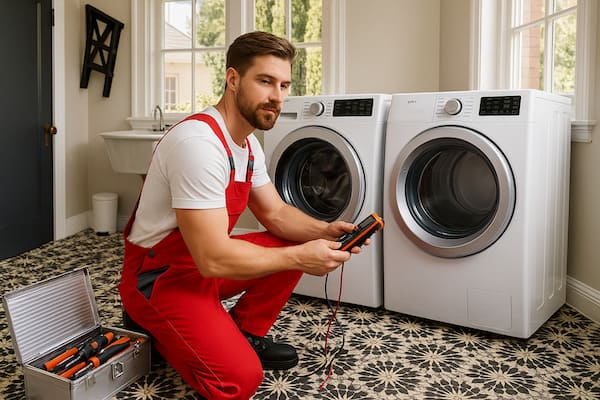
A washing machine relies on precise internal communication to perform each stage of the cycle correctly. One of the most critical components responsible for that accuracy is the water level detection system. When your washer stops recognizing how much water is inside the drum, the entire wash cycle becomes unreliable. You may notice the machine overfilling, underfilling, stopping mid-cycle, refusing to start, or showing unexplained error codes. All these symptoms often point to a single issue: a malfunctioning pressure sensor or a kinked pressure hose. Understanding how these components work and what happens when something disrupts them can help you act quickly, prevent damage, and avoid costly repairs in the future.